









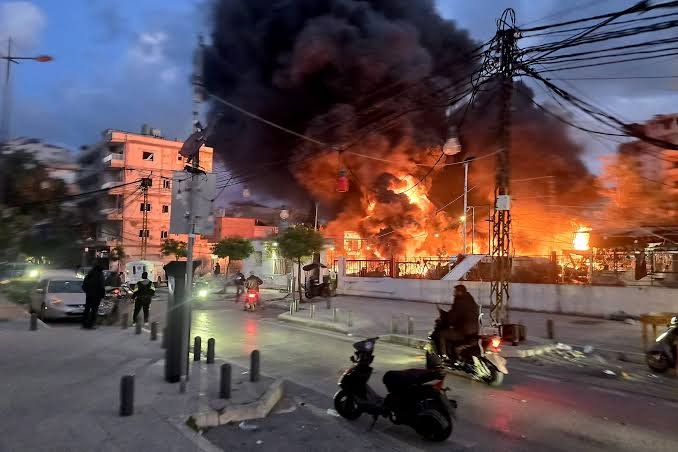
The United Arab Emirates Ministry of Defence has disclosed that the country’s air defence systems intercepted multiple aerial threats launched from Iran, as tensions continue to escalate in the region.
In a statement posted on its official X handle on Saturday, the ministry said that “UAE air defence systems on 14th March engaged 9 ballistic missiles and 33 UAVs launched from Iran.”
The disclosure highlights the scale of the latest wave of attacks that the Gulf nation says it has had to repel in recent days.
According to the ministry, the interceptions form part of a broader pattern of hostilities since the beginning of what it described as “the onsets of the blatant Iranian aggression.”
It stated that its defence forces had repeatedly been forced to activate their air defence systems to neutralise incoming threats aimed at the country.
Providing a cumulative breakdown of the attacks so far, the ministry said that “since the onsets of the blatant Iranian aggression, UAE air defences have engaged 294 ballistic missiles, 15 cruise missiles and 1600 UAVs launched from Iran.”
The figures suggest a sustained barrage of aerial projectiles and drones that authorities say have targeted the United Arab Emirates over time.
The ministry also confirmed that the attacks have resulted in casualties and injuries involving people from several nationalities living and working in the country.
According to the statement, “these attacks have resulted in 6 fatalities of Emirati, Pakistani, Nepali and Bangladeshi nationals.”
It further disclosed that a significant number of individuals sustained varying degrees of injuries during the attacks.
The ministry said “141 minor to moderate injuries” had been recorded among residents and workers from a wide range of countries.
Those affected, the statement said, include nationals of the United Arab Emirates as well as individuals from Egypt, Sudan, Ethiopia, the Philippines, Pakistan, Iran, India, Bangladesh, Sri Lanka, Azerbaijan, Yemen, Uganda, Eritrea, Lebanon, Afghanistan, Bahrain, Comoros, Türkiye, Iraq, Nepal, Nigeria, Oman, Jordan, Palestine, Ghana, Indonesia and Sweden.
While giving the casualty details, the ministry did not specify the locations where the fatalities and injuries occurred or the specific incidents that led to them.
However, the statement suggested that the attacks involved multiple aerial threats over time.
Reaffirming the country’s defence posture, the ministry said the armed forces remain on high alert and prepared to respond to any further threats targeting the nation’s territory or security.
“The Ministry of Defence affirmed that it remains fully prepared and ready to deal with any threats,” the statement said.
It added that the military would “firmly confront any attempts to undermine State security in a manner that ensures the protection of its sovereignty, security and stability, and safeguards its national interests and capabilities.”
Authorities did not indicate whether additional defensive measures have been put in place following the latest interceptions, but reiterated their commitment to maintaining national security and protecting residents across the federation.
On Friday, SaharaReporters reported that the government of Qatar sent another formal complaint to the United Nations and the United Nations Security Council over what it described as repeated military aggression by Iran against its territory.
In a statement released on Friday, Qatar foreign ministry said it had sent its eighth identical letter to the UN Secretary-General, António Guterres, and to the United States Permanent Representative to the UN and President of the Security Council for March, Michael Waltz.
According to the statement, the letter was submitted by Qatar’s Permanent Representative to the United Nations, Sheikha Alya Ahmed bin Saif Al-Thani.
The Qatari government said the communication was aimed at informing the UN about what it called “Iranian aggression” against its territory and to highlight the security implications for the region.
The letter described the incidents as serious violations of Qatar’s sovereignty and territorial integrity.
Culled from Sahara Reporters