









Power built for African realities: the local energy solutions rewiring resilience across the continent
Across African energy and transport markets, some of the most useful solutions are being built around the practical realities users navigate every day: battery-swapping for riders who cannot wait hours to charge, solar monitoring for systems spread across remote sites, hybrid microgrids that can be repaired locally, and hospital utilities that generate power and oxygen on site.
Engineers across the continent are developing solutions for these conditions. Their work reflects local infrastructure realities, user behaviour, affordability, maintenance needs and routes to market. Many are building ventures around technologies that can be deployed, serviced and scaled in the communities they are designed to serve.
The result is a growing field of energy and mobility businesses focused on practical resilience: keeping solar systems operational, supporting cleaner transport, reducing diesel dependence, improving rural power access and strengthening healthcare infrastructure.
Diesel replacement is the focus of Johannes Amo-Aye’s Fusion Wind Turbine, a Ghana-developed hybrid microgrid system for off-grid communities, schools and health centres. Shortlisted for the 2026 Africa Prize, the technology combines wind and solar power in a modular system designed for reliable local electricity.
Developed through MINAGIE Energy, the system uses a gearless vertical-axis wind turbine with a solar arch to generate power across different weather conditions. It is designed to be locally repairable, quieter than diesel generators and suitable for remote settings. Around 90% of the system’s components are designed and manufactured in Ghana.
Rural health centres are one clear use case. Reliable electricity supports night-time treatment, vaccine refrigeration and the safe use of medical equipment. Early installations in Ghana have replaced diesel generators, reducing fuel costs while supporting lighting and refrigeration at remote health facilities.
Fusion Wind Turbine has delivered more than 6,000 hours of clean energy at Adeiso and Asitey Health Centres in Ghana’s Eastern Region, supporting vaccine preservation and helping safeguard more than 300 maternal deliveries each year. At Adeiso Health Centre alone, the system has eliminated diesel costs of around 600 USD per month. MINAGIE Energy has also trained 12 technicians through its MTEDI programme, with plans to reach more than 200 young people as it scales and has secured a letter of intent to expand to Asitey Presby Primary School in 2026, where the system would power water infrastructure for 350 pupils and the adjacent clinic. The company was also selected as one of the winners of the 2025 ImaGen Ventures Global Challenge.
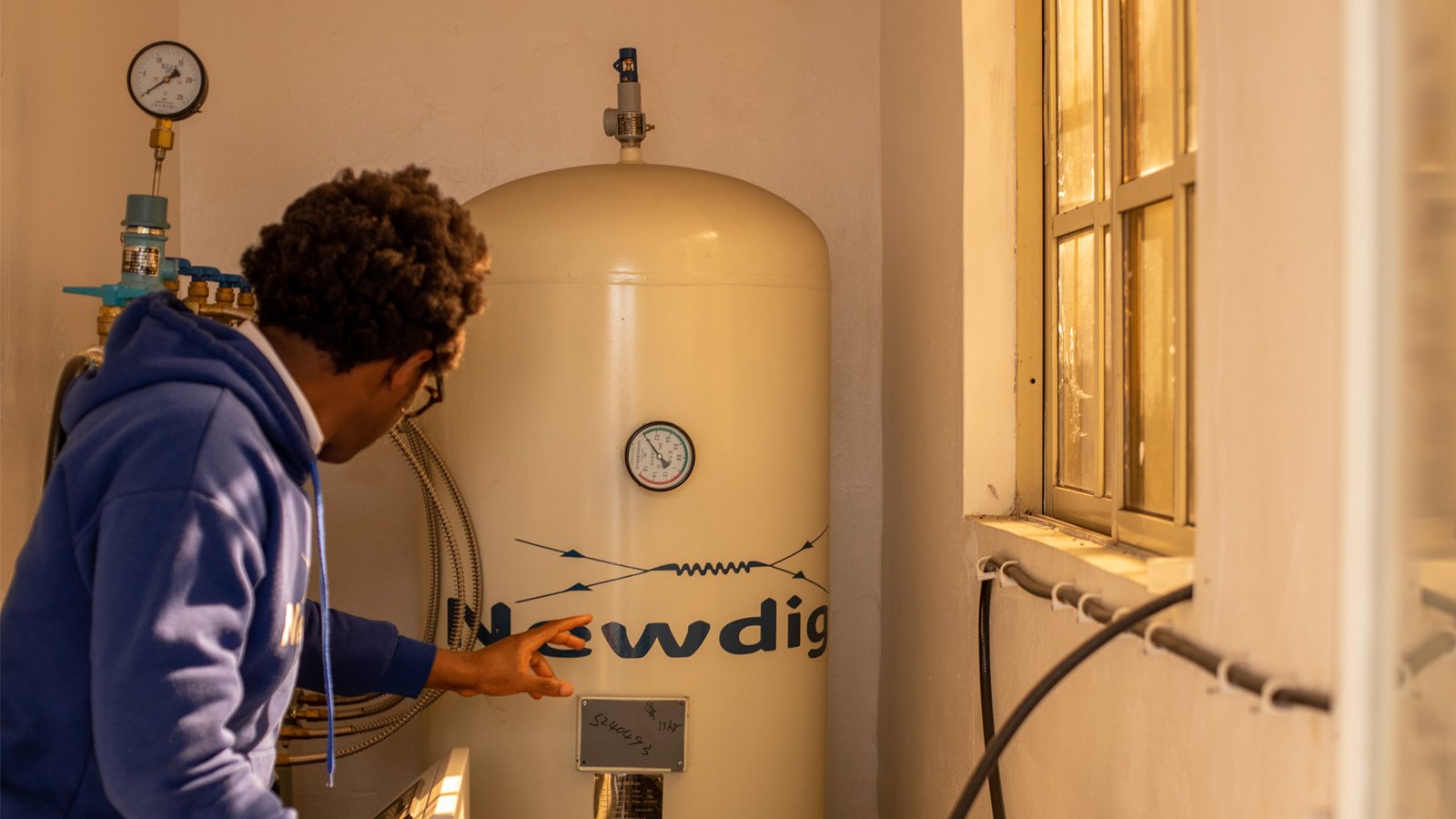
In Nigeria, Derick Nwasor’s Just Add Water is designed for healthcare facilities that need reliable electricity and medical-grade oxygen. Also shortlisted for the 2026 Africa Prize, the system uses regenerative fuel cell technology to split water into hydrogen and oxygen, providing both services on-site. The hydrogen is used to generate electricity, and the oxygen is captured for medical use. This can help hospitals reduce dependence on diesel and third-party oxygen delivery.

“In a hospital, power and oxygen are not ‘nice to have’, they decide who lives. Just Add Water exists so doctors can focus on care, not diesel, and so hospitals can keep lights on and oxygen flowing when it matters most.”
Just Add Water has already been deployed in three hospitals in Lagos, generating clean electricity and producing medical-grade oxygen to support patient care. Its service model is designed to help facilities adopt the technology without taking on the full upfront cost and complexity of owning specialist infrastructure.
Just Add Water is now scaling its quantum and AI-optimised regenerative fuel cell system from 100kW towards 1MW deployments across Nigeria, supporting its ambition to provide cleaner, more reliable power and medical-grade oxygen for healthcare facilities. The venture has also been recognised as a winner of the Harvard Business School Africa New Venture Competition, strengthening its profile as it moves towards wider deployment.
Carol Ofafa’s E-Safiri applies the same practical approach to cleaner mobility in Kenya, with solar-powered charging and battery-swapping stations for electric bicycle and motorbike users. A 2025 Africa Prize finalist, E-Safiri is designed for rural and peri-urban transport users.
The model allows users to swap batteries at local hubs, reducing charging time and avoiding dependence on home charging. This is useful in areas where motorcycles and bicycles play a central role in work and local transport, and where charging infrastructure and household access to electricity remain limited.
E-Safiri’s hubs are powered by solar energy and supported by smart batteries and a central dashboard that tracks energy use and battery status. Surplus power can support other local services such as phone charging, cooling, solar drying and street lighting. The hubs can therefore serve both transport users and nearby businesses or residents, including those without grid connections.
The company has now deployed eight solar hubs and has 100 riders on the road, while avoiding more than 1,000 tonnes of harmful emissions. Since February 2025, E-Safiri has increased revenue 24-fold, attracted debt financing and built daily productive-use demand, with more than 150 customers using its hubs for services including cold storage. Carol has also been accepted onto the Global Entrepreneurs Programme run by the UK Department for Business and Trade.
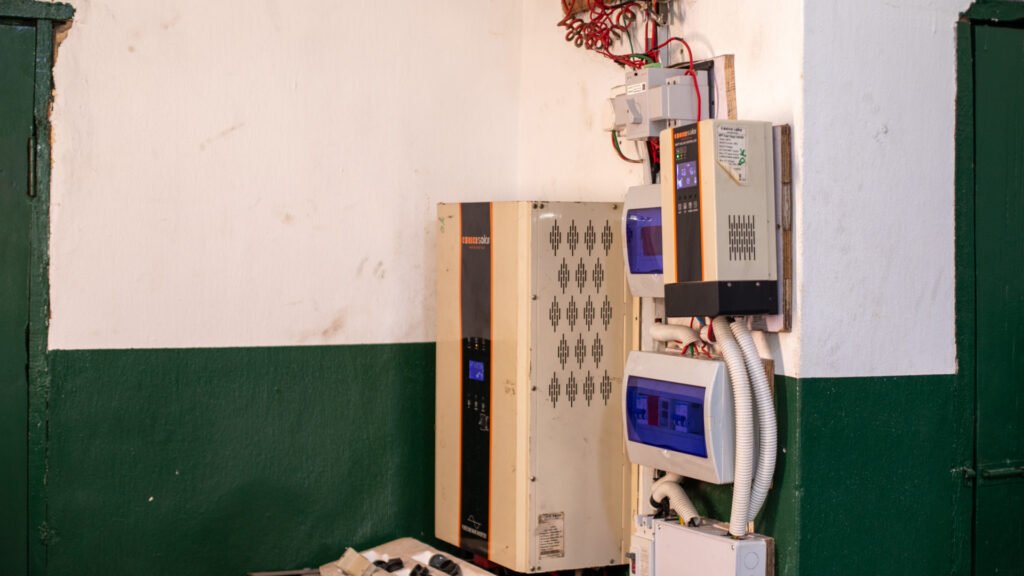
For solar providers managing installations across multiple sites, Innovex’s Remot, developed by Ugandan engineer David Tusubira, addresses a critical operational challenge: how to track system performance after deployment. A 2020 Africa Prize finalist, Tusubira developed a hardware and software platform that monitors the performance, use and health of solar photovoltaic installations.
Remot gives solar companies and energy providers real-time data on how systems are being used, while detecting inefficiencies, battery health issues and potential failures. This helps operators maintain systems more effectively and gives customers more reliable access to power. For schools, mills, water pumps and community facilities, monitoring can help protect the value of a solar installation over time.
The system has been used across schools, solar maize mills and water pump installations in countries including Uganda, Kenya, Tanzania and the Democratic Republic of Congo. Its applications show the importance of maintenance, data and long-term performance in energy access.
Over the past year, Innovex has expanded Remot’s role in off-grid energy management through a partnership with Ennos, manufacturing more than 1,000 solar water pump controllers fitted with Innovex remote monitoring units and connected to the Remot platform for pay-as-you-go distribution across Africa. Through a partnership with the Energy Saving Trust, Innovex has also developed predictive maintenance machine-learning algorithms for off-grid appliances, including solar water pumps, solar freezers and solar maize mills, strengthening Remot’s ability to support long-term system performance.
These companies demonstrate that locally grounded ideas can become scalable ventures when paired with the right business support, networks and visibility. Together, they reflect a growing market for practical, commercially viable solutions that can strengthen energy resilience across communities, businesses, transport systems and health facilities.
The Africa Prize for Engineering Innovation, run by the Royal Academy of Engineering, has helped support this pipeline through funding, training and networking opportunities. Since 2014, the Prize has supported more than 180 businesses from 24 countries, with alumni introducing more than 700 products and services to market and benefiting more than 11 million people. The 2026 shortlist includes innovators across 11 African countries, with Lesotho and Niger represented for the first time, after a record number of applications from more than 30 countries.
Applications for the next Africa Prize cycle will open on 13 July and close on 8 September 2026. To learn more about this year’s shortlisted innovators, or to apply for the next round, visit africaprize.raeng.org.uk.