









By Kelvin Obambon
The Cross River State Government has successfully concluded a statewide intensive capacity-building training for over 700 smallholder farmers, youth groups, and agricultural extension officers across the three senatorial districts to drive its ambitious “Coffee Revolution” initiative.
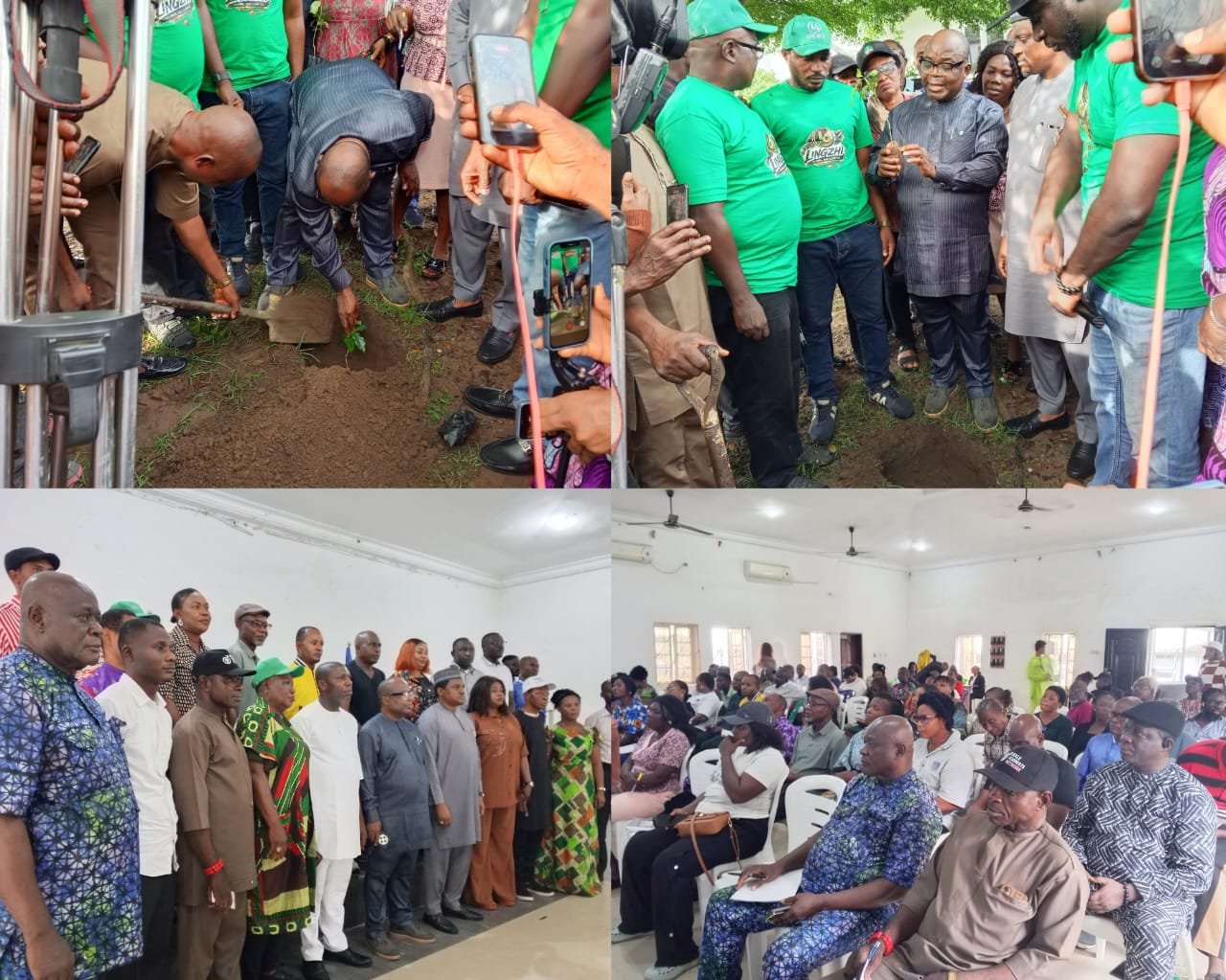
The statewide training was concluded on Monday at the Calabar Municipal Council Hall during the stakeholders’ training for the Southern Senatorial District. This followed back-to-back training sessions launched the previous week in Bekwarra for the Northern District, and on Thursday, June 25, 2026, in Ikom for the Central District.
Speaking during the event, the state Commissioner for Agriculture and Irrigation Development, Hon. Johnson Andiambey Ebokpo, emphasized that the agricultural drive is a deliberate, strategic policy under the “People First” administration of Governor Bassey Edet Otu aimed at boosting rural liquidity and economic diversification.
“The coffee revolution in Cross River State is not by chance,” Ebokpo stated. “It is driven by the passion and visionary leadership of His Excellency Apostle Senator Prince Bassey Edet Otu to diversify our economy through agriculture and create sustainable livelihoods for our people.”
Addressing why the government chose to prioritize a smallholder model over large-scale commercial farming initially, Ebokpo explained that the administration is focused on expanding the localized money supply, specifically targeted at increasing current and savings accounts (CASA) for ordinary citizens.
He drew parallels to the historic financial transformation seen in Ikom, stating that “So many of you have been to Ikom. It is a smallholder cocoa development scheme that has made the economy of Ikom what it is. This money is left in the hands of ordinary people like you and I. The idea is that the liquidity from coffee will support the fashion industry, will support the culinary industry, which is the food industry because by this time, we will increase the purchasing power of our people.”
The Commissioner further emphasized that coffee offers unique, low-barrier opportunities for the state’s massive pool of young creatives. Unlike cocoa, which demands high capital to process, Ebokpo noted that “with coffee, anybody can become a dollar, a pound, a euro earner from just having the right skill to process coffee. You can do it in your house. Our desire is that in the next five years, we should have as many coffee brands across the world coming from Cross River.”
Continuing, he explained that “Cross River holds a distinct global advantage. It is one of the few regions capable of comfortably cultivating both major commercial coffee species: premium Arabica (thriving in the cold, high-altitude topographies of Obanliku and Obudu) and Robusta (ideal for the lowlands).”
Furthermore, Ebokpo revealed that the Southern Senatorial District possesses a critical meteorological edge for Robusta production that competing countries lack.
“The rainfall that you have in Cross River State is almost 33% of Africa’s rainfall around the southeastern part of the Niger Delta,” the Commissioner said. “The other countries that produce Robusta – Brazil, India, Indonesia – they do not have the rainfall that you have. It means you can intensify your yields because you have rainfall.”
He then highlighted the state’s unique geological formation, known as Montmorillonite clay soil, explaining that this specific soil property, which already makes Cross River cocoa the tastiest in the world, is expected to give local coffee an elite flavour profile that will command premium prices in international markets.
To ensure deep market penetration, Ebokpo disclosed that the state government has heavily subsidized improved planting materials, slashing the cost of coffee seedlings from N1,000 to just N300, with government absorbing the N700 balance.
He also said that while distribution began last year, it was temporarily suspended due to unfavorable meteorological conditions to prevent poor field survival rates. The Commissioner however announced that the distribution of these subsidized seedlings will officially resume on Wednesday, July 1, 2026.
In his remarks, the Special Adviser to the Governor on Agriculture, Prof. John Shiyam, urged the trained farmers, extension officers, and zonal managers to immediately begin land preparation to maximize the wet season.
“As we give you the seedlings by the end of this week or early next week, your land is already prepared and you’ll plant immediately,” Prof. Shiyam advised. “The essence is for your crop to receive at least three months of rainfall before the first dry season will set in.”
Shiyam explained that the programme offers sustainable empowerment over transient political handouts. “By the time you have one hectare of coffee or you have two hectares, you are already a millionaire. In the next three, four years, when your coffee begins to bear, the market is already there for you,” he added.
To ensure long-term global competitiveness, the Ministry of Agriculture announced that it will implement a strict data-driven tracking system to trace farmers from the point of seedling collection to their actual geographic locations. Following the distribution, farmers will be organized into seven specialized cooperatives focused on distinct functions within the value chain.
The government also extended an open invitation to Nigeria’s organized private sector to invest in the state’s coffee development through value-addition partnerships. Documentation is currently ongoing to establish a commercial coffee estate in the South, alongside two or three cocoa estates.
To maintain regulatory compliance and benefit from upcoming federal interventions, the state has mandated that all participants register with the National Coffee and Tea Association of Nigeria (NACOFTA) and the All Farmers Association of Nigeria (AFAN).
There were goodwill messages from various agricultural stakeholders, including AFAN State Chairman Nyam Bisong, signaling a unified institutional backing for Cross River’s rising coffee industry.
The training got to its peak with a practical demonstration by Prof. Shiyam, on how to plant coffee seedlings.