

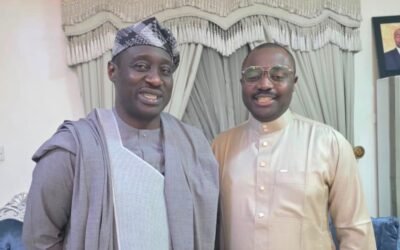
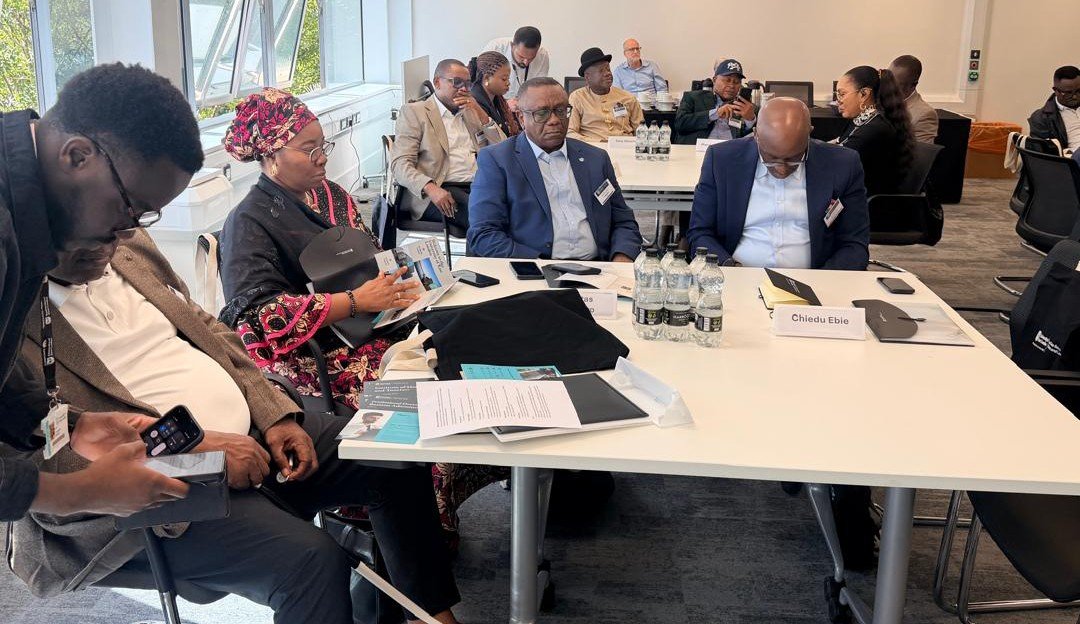
The Cross River State Representative on the Board of the Niger Delta Development Commission (NDDC), Rt. Hon. (Otuekong) Orok Otu Duke, Ph.D, has joined the Chairman of the Commission, Chiedu Ebie, Esq., and other members of the NDDC Board in London for a three day Executive Programme in Strategic Leadership and Governance at the prestigious Royal Docks School of Business and Law, University of East London.
The high level executive programme brings together senior leaders, renowned academics and global governance experts in an intensive learning experience designed to sharpen leadership capacity, strengthen institutional governance and expose participants to emerging global trends shaping public sector organisations.
Welcoming the NDDC delegation, the Vice Provost (Business) and Executive Dean of the Royal Docks School of Business and Law, Professor Fatima Annan-Diab, described the programme as a platform for meaningful knowledge exchange, innovation and collaborative learning. She noted that the University of East London is committed to developing leaders who create positive change through responsible leadership, practical solutions and strategic thinking.
READ ALSO: No student trapped in Anambra building collapse incident – Oko Poly management
According to her, the programme focuses on contemporary issues in strategic and sustainable leadership, governance, risk management, institutional development and the evolving challenges confronting public institutions across the world.
Among the key sessions are Board Governance, Risk Management and Leadership in Public Institutions, Global Trends Shaping Public Sector Leadership, Executive Decision Intelligence in the Digital Age, and Inclusive Leadership for Effective Governance, all tailored to equip participants with practical insights for effective public sector leadership.
The NDDC delegation is led by the Chairman of the Commission, Chiedu Ebie, Esq., and includes Chief Dimgba Eruba (Abia State Representative), Apostle Abasiandikan R. Nkono (Akwa Ibom State Representative), Senator Dimaro Deyanbofa (Bayelsa State Representative), Rt. Hon. (Otuekong) Orok Otu Duke, Ph.D (Cross River State Representative), Rt. Hon. Monday Igbuya (Delta State Representative), Hon. Patrick Aisowieren (Edo State Representative), Dr. Chidiebere Kyrian Uchegbu (Imo State Representative), Hon. Otito Thompson Atikase (Ondo State Representative), Chief Hon. Tony Okocha (Rivers State Representative), Hon. Nick Wende (North Central Representative), Senator (Dr.) Ibrahim Abdullahi Gobir, MFR, CON (North West Representative), Mrs. Felicitas Okonkwo (Federal Ministry of Finance Representative), Engr. Mrs. Bahijjahtu Abubakar, FNSE (Federal Ministry of Environment Representative), Ambassador Desmond Akawor (Revenue Mobilisation, Allocation and Fiscal Commission Representative), Dr. Igo Weli (Oil Producers Trade Section Representative), Board Secretary Victor Arenyeka, Esq., alongside senior officials of the Commission.
Speaking on the significance of the programme, Rt. Hon. Orok Otu Duke described the training as timely and strategic, stressing that the demands of modern public institutions require leaders who are equipped with contemporary knowledge, global perspectives and innovative approaches to governance.
“The Niger Delta is at a critical stage of its development journey, and institutions like the NDDC must continually strengthen their capacity to respond effectively to the expectations of the people. This executive programme provides an invaluable opportunity to learn from global best practices, exchange ideas with leading experts and refine the leadership skills required to deliver sustainable development across the region,” he said.
The Cross River representative further noted that effective governance goes beyond policy formulation, emphasising that transparency, accountability, strategic planning, prudent risk management and informed decision making remain essential ingredients for achieving impactful and people centred development.
He added that the knowledge and experience gained from the programme would further enhance the Board’s collective ability to provide sound oversight, formulate progressive policies and support the Commission’s mandate of driving sustainable infrastructure, economic growth and social development throughout the Niger Delta.
Significantly, the executive programme is an investment in institutional capacity building, particularly at a time when development agencies are expected to navigate increasingly complex economic, technological and governance challenges.
By exposing Board members to global best practices in leadership, governance and decision making, the programme is expected to strengthen the Commission’s effectiveness, improve strategic oversight and reinforce its commitment to delivering transformational projects that will positively impact millions of people across the Niger Delta region.