





By Solomon Azu
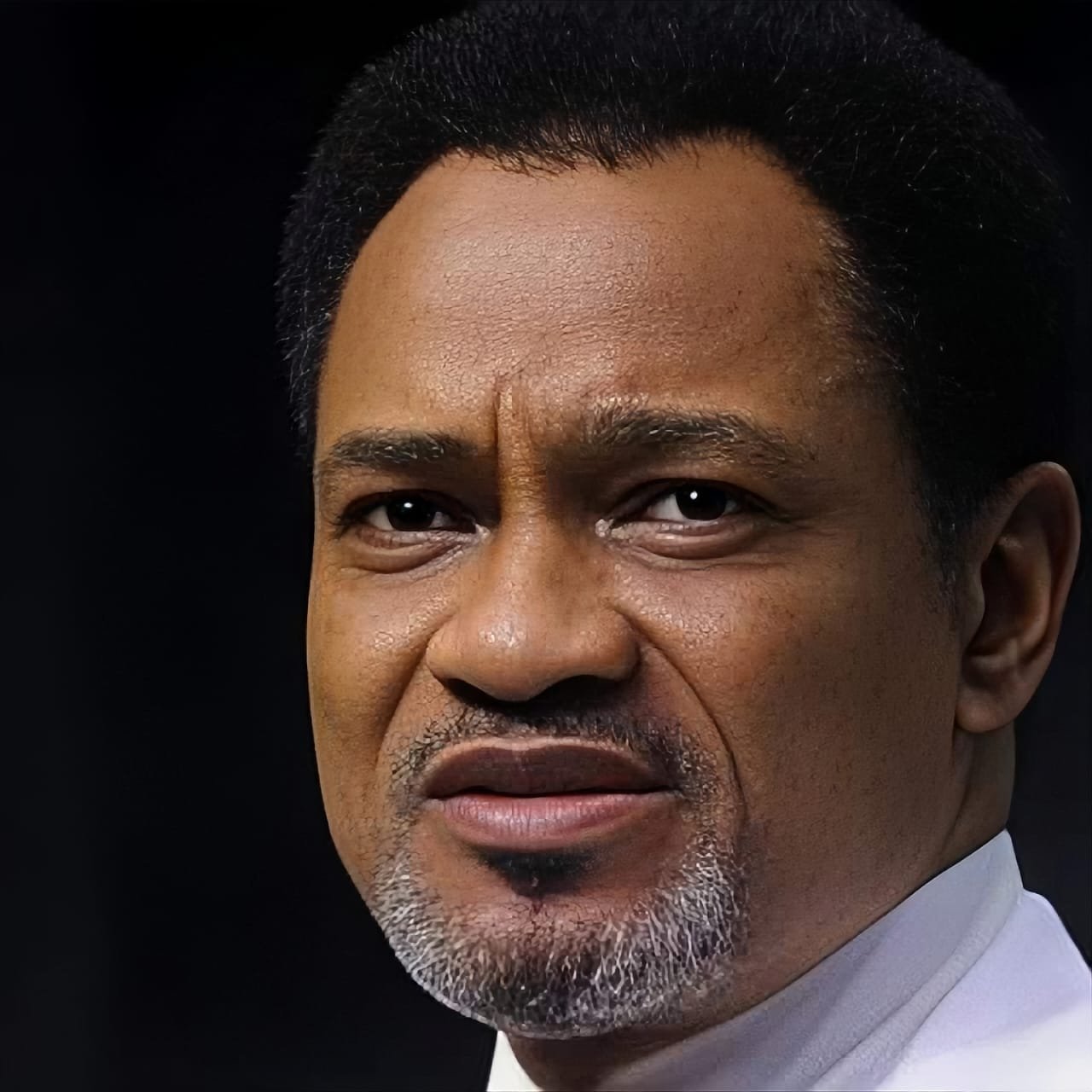
There are moments in the life of a state when the conversation changes not because of a politician, but because of a witness. Last week, that witness was Archbishop Josef Bassey, the Territorial Archbishop of Calabar and Founding Patriarch of the Cross River State Christian Leaders Forum.
A man who once led the charge against an incumbent government returned to the podium with a different verdict. After what he called a “just weighing” of evidence, his conclusion was clear and politically consequential: Governor Bassey Otu’s performance in three years has been “extraordinary,” and he has earned a second term.
The address, delivered at a world press conference, was not a campaign rally. It was framed as a moral and spiritual audit. And that is precisely why it will shape politics in Cross River for the next 18 months.
Bassey began where he insisted every fair assessment must begin: May 2023. He painted a picture of a state in profound distress. Domestic debt stood at about ₦204 billion. External obligations were substantial. Pensioners were owed gratuities accumulated over fourteen years. The civil service had been bastardised. Public institutions were in ruins. The Governor’s Office was “a tragedy,” the State Library “in desolation,” the Nigerian Chronicle complex “extensively vandalised,” and Tinapa, once the state’s signature investment, had been lost to AMCON. Roads had become death traps. Air connectivity to Calabar had collapsed. And most painfully, the peace Cross River was once known for had given way to kidnapping, cult violence and fear. “Let us not sanitise history,” Bassey said. “Cross River was in a deep pit. The government that came in May 2023 did not inherit a normal developmental starting point; it inherited a rescue operation.”
It is from that baseline that he measured the last three years. And his measurement produced numbers and narratives that favour the Otu administration. Domestic debt, he noted, has fallen by roughly ₦72 billion to about ₦132 billion. Internally generated revenue has risen substantially even as federal allocations remain modest. Over 608 kilometres of roads have been touched — new roads, rehabilitation, dual carriageways and networks spread across the North, Central and South. Regular flights have returned to Calabar. One hundred and ninety-six Primary Healthcare Centres have been upgraded, another ninety-six revitalised. Gratuities have been cleared up to 2015.
But the Archbishop’s most compelling argument was not about kilometres or naira. It was about what he called “the courage and patriotism of recovery.” He argued that politics has conditioned people to celebrate new buildings with new plaques, while ignoring the harder work of rescuing what already belongs to the people. In the last three years, he said, the Governor’s Office, State Library, Cultural Centre, CRBC, the Chronicle, government lodges and other public assets damaged by neglect and EndSARS have been rebuilt or modernised. Tinapa has been recovered. “There is patriotism in building something new,” he said, “but there is also a peculiar patriotism in refusing to allow what your fathers built to die.” To Bassey, that explains why the work may not look dramatic to the untrained eye. When recovery is finished, the building still bears the same name on the same site. But practically everything that makes it live may have been built again.
He was equally direct about security. In 2023, fear had become part of daily life. Today, he said, peace has become ordinary again. People move, work and return home without the consciousness of danger that once defined evenings in Calabar. That, he argued, is an extraordinary achievement precisely because when order returns, people stop talking about it and simply live.
Yet this was not a blanket endorsement. Bassey gave weakness its proper weight, and his harshest words were reserved for the government’s human capital. “Some appointees in this government are simply not good enough,” he declared. “Some are occupying offices larger than their competence. Some appear to believe that appointment itself is an achievement.” He called for a purge ahead of the next phase. Strategic appointments, he said, must cease to be political settlements. The next four years will require character, competence, capacity and execution. He also demanded a shift from counting inputs to measuring outcomes. Don’t tell us how many youths were trained, he said. Tell us how many are now economically productive. Tinapa has been recovered, now make it work. The Deep Seaport is advancing, now push until ships berth there.
That demand sets up the central thesis of the address. Bassey defined the first three years as a period of rescue, recovery, rebuilding, restoration and repositioning. The next phase, he argued, must be aggressive development: production, investment, industry, jobs and wealth. He traced an emerging architecture for that future — agriculture feeding processing, roads moving goods, the seaport opening international markets, aviation moving people, security protecting capital, tourism bringing money, and human capital supplying competence. “We have spent three years buying back our past,” he said. “Now we must purchase the future.”
It was in that context that he delivered the political headline. “My standard has not changed; the evidence has,” Bassey stated. “Governor Bassey Edet Otu has earned a second term.” He went further to argue that continuity is now a state necessity, not a party preference. “At this point in our recovery, Cross River State needs the continuity of a second Otu administration, not so that another four years can be spent rebuilding yesterday, but so that what has been recovered and repositioned can finally become the foundation for aggressive development.” His plea was pointed: “Not for Otu. Not for APC. For Cross River. Never again must we gamble with Government House.”
The weight of that statement lies in who is saying it. This is a cleric who confronted the last government when he believed the state was headed in the wrong direction. His willingness to now defend this one gives the administration credibility beyond partisan lines and provides a moral framework for the 2027 debate: continuity versus experiment.
Bassey also introduced a spiritual dimension that cannot be ignored in Cross River politics. He commended the Governor for publicly dedicating the state to God and warned of “a battle for the soul and destiny of Cross River State.” For him, governance must be fought both spiritually and naturally, through truth, justice, strong institutions and competent leadership.
In the end, the Archbishop offered both verdict and charge. Cross River, he said, is profoundly better today than in May 2023. But recovery without prosperity will be incomplete. The task now is to consolidate what has been repositioned and unleash development. “Governments will come and go. Political parties will come and go. All of us will eventually leave the stage. Cross River remains. And Cross River must win.”
With that, the 2027 conversation has been reset. It is no longer just about what has been done. It is about whether to interrupt a recovery in order to start again. And according to one of the state’s most fearless voices, that would not be sophistication. It would be self-sabotage.