









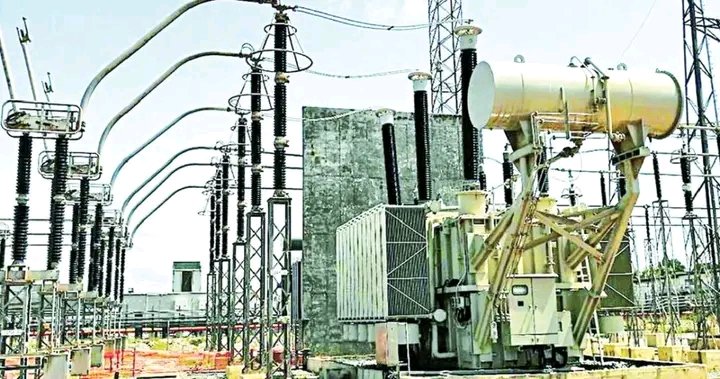
Manufacturers, cold-room operators and frozen food dealers are counting losses as persistent power outages force businesses to rely on generators, raising operating costs and threatening their survival.
Findings by Saturday PUNCH show that prolonged blackouts in parts of the country have compelled many small and medium-scale enterprises to spend heavily on diesel and petrol to keep running.
Frozen food operators who spoke with Saturday PUNCH also lamented that inadequate electricity had caused the spoilage of goods worth millions of naira.
According to data obtained from nationalgrid.ng on Thursday evening, the country generated 257.2MW, representing an 89.1 per cent drop.
READ ALSO: 2027: Vote candidates of your choice, Bishop Ezeokafor urges Anambra Catholic faithful
An official of a beverage manufacturing company in the Agbara industrial area of Ogun State, Femi Adeagbo, told Saturday PUNCH on condition of anonymity that persistent electricity disruptions had cut the company’s daily production capacity by about 40 per cent while sharply raising operating costs.
He said the Ibadan Electricity Distribution Company promised companies in the industrial zone between 20 and 22 hours of electricity daily, but they currently received less than 10 hours of supply.
He lamented that the situation had forced many companies to rely on gas-powered systems and diesel generators to keep production lines running.
He added that many companies along the axis were struggling to meet production targets because of unreliable electricity supply.
He explained that the disruptions had reduced his company’s daily output from an expected 10,000 cases of beverages to about 6,000 cases.
“It has had a major impact on our operations. No company can survive under the current state of Nigeria’s power system unless urgent steps are taken to address the challenges,” he said.
He disclosed that the company spent about N130m monthly on energy, while diesel expenditure alone stood at between N16m and N20m monthly for weekend operations.
“When we operate on gas from Monday to Friday and switch to diesel during the weekends, we spend between N8m and N10m on diesel weekly. That amounts to approximately N16m to N20m monthly on diesel for weekend operations alone.
“We have not even factored in what we would spend if we had to rely on diesel during the weekdays. The cost would certainly be much higher,” he added.
He said the added energy costs, equipment maintenance and lower production output had squeezed expected profit margins.
He added that the company was considering further diversification into solar energy to reduce reliance on the national grid, noting that some major manufacturers, including Nigerian Breweries and Seven-Up, were also exploring alternative energy sources.
A cold-room manager at Olomore Market, Abeokuta, Ogun State, Odedina Olaide, told Saturday PUNCH that operators had struggled to stay afloat since September when electricity supply worsened.
She said her business spent at least N218,400 daily on diesel to buy about 120 litres at N1,820 per litre.
She disclosed that the cold-room had spent more than N10m on diesel over the past two months, yet generators could not match the freezing achieved with regular electricity.
“The amount we spend on diesel daily is enormous, not to talk of the monthly cost. We buy at least 120 litres of diesel every day at the rate of N1,820 per litre,” she said.
“In the last two months, we have spent more than N10m on diesel to power our cold-room.”
Culled from The Punch