
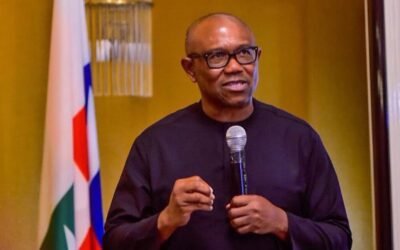

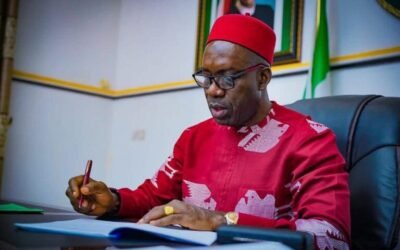

Following his appointment by President Bola Ahmed Tinubu as Cross River State’s representative on the Board of Niger Delta Development Commission, NDDC in September 2023, Rt. Hon. Orok Duke, PhD, assumed a responsibility that placed him within the institutional framework through which Cross River State engages the Commission on regional development matters.
The core mandate of NDDC is to facilitate the sustainable development of the Niger Delta through infrastructure provision, economic empowerment, environmental interventions and other programmes aimed at addressing the region’s developmental challenges.
For Cross River State, effective representation on the Board requires more than occupying a statutory position. It involves identifying the state’s development priorities, articulating the needs of its communities, engaging relevant stakeholders and ensuring that the state’s interests are adequately reflected in the Commission’s programmes and interventions.
READ ALSO: Manufacturers, frozen food dealers groan as blackouts persist
This responsibility is significant, given the geographical and developmental diversity of Cross River State. From its coastal communities to its riverine settlements, urban centres and rural hinterlands, the state’s development requirements are varied and often demand different forms of intervention. Therefore, a representative with legislative and administrative exposure is better positioned to appreciate the institutional processes through which these needs must be translated into actionable proposals, budgetary considerations and development projects.
In 2025, during the NDDC’s Board and Management Strategic Retreat in Lagos, Duke displayed great wit. At the retreat, themed “Repositioning NDDC for Efficient Service Delivery”, he advocated for equitable resource allocation, sustainable infrastructure and grassroots-oriented interventions for Cross River State. More importantly, he emphasized that the Commission’s responsibilities should extend beyond contract awards and project inauguration to include effective execution, proper maintenance and the actual delivery of intended benefits.
This position reflects an important principle of public administration: the success of government intervention should be measured not simply by financial commitments or the number of projects announced, but by the quality, functionality and sustainability of the outcomes delivered.
Under Duke’s representation, several NDDC-supported interventions have been reported in Cross River State, particularly in environmental sanitation, community support and public welfare. One notable example is the facilitation of waste-management dumpsters to the state in April 2025. The intervention brought the number of waste bins donated by the Commission to over 200, providing additional support for Cross River’s environmental sanitation efforts.
The importance of this intervention extended beyond the provision of waste containers. Proper waste management is fundamental to environmental protection, public health, urban cleanliness and the preservation of the state’s tourism potential.
By facilitating these interventions, Duke demonstrated the relevance of aligning federal development resources with existing state priorities. It also highlighted how relatively modest community-focused interventions can contribute to broader environmental objectives when properly deployed and maintained. Other reported NDDC interventions associated with Cross River State have included solar-powered streetlighting, medical outreaches, sanitation support and the distribution of relief materials to vulnerable communities.
These interventions address different dimensions of development. While infrastructure improves the physical environment, healthcare outreach extends basic medical assistance to underserved populations, and humanitarian support provides temporary relief to households facing economic and social difficulties.
Therefore, the responsibility that saddles a state representative such as Duke, does not end with facilitating an intervention. It also encompasses ensuring that projects are properly executed, public assets are protected and the Commission remains responsive to emerging community needs, which he has been doing since assumption of office.