






By Kelvin Obambon
In a proactive move to safeguard the state’s agricultural output against shifting climatic patterns, the Cross River State Government has issued comprehensive Early Planting Guidelines for the 2026 farming season.
The Commissioner for Agriculture and Irrigation Development, Hon. Johnson Andiambey Ebokpo, announced the measures during a media chat in Calabar.
Highlighting the urgency of the situation, the Commissioner noted that the guidelines are essential to mitigate risks associated with predicted heavy rainfall and potential flooding later in the year.
READ ALSO: 2027: Group Launches ‘Grassroots Initiative for Otu/Odey,’ Calls for Consensus in C’River
Citing forecasts from the Nigerian Meteorological Agency (NiMet), Hon. Ebokpo revealed that Cross River is expected to record between 1,500mm and 2,200mm of rainfall this year. According to him, the forecast warns of a 30% increase in flood risk during August and September, coupled with an early onset of the rainy season.
“Based on the NiMet report, these projected changes will affect our farming calendar,” Hon. Ebokpo stated. “It is therefore important for farmers to prepare for early cultivation to enable harvesting before the peak flood period.”
The 2026 strategy is anchored on aggressive promotion of cowpea and soya bean cultivation. These crops are being introduced not only for their climate resilience but as a direct intervention against malnutrition.
The Commissioner referenced the 2025 Cowpea Baseline Survey, which identified a crisis-level deficiency in protein intake across the state due to the high cost of animal products.
“As has been widely emphasized, if Nigeria is to achieve high-income status, the most important investment to make will be in early childhood, particularly in the area of nutrition,” Ebokpo said. He added that the government has secured a guaranteed market for commercial farmers, signing a contract with Flour Mills for the supply of the TGX 1951 soya bean variety.
To support this, he said the Ministry will commence the distribution of improved seeds this April, following the successful distribution of 3,600 seed packs in the previous year.
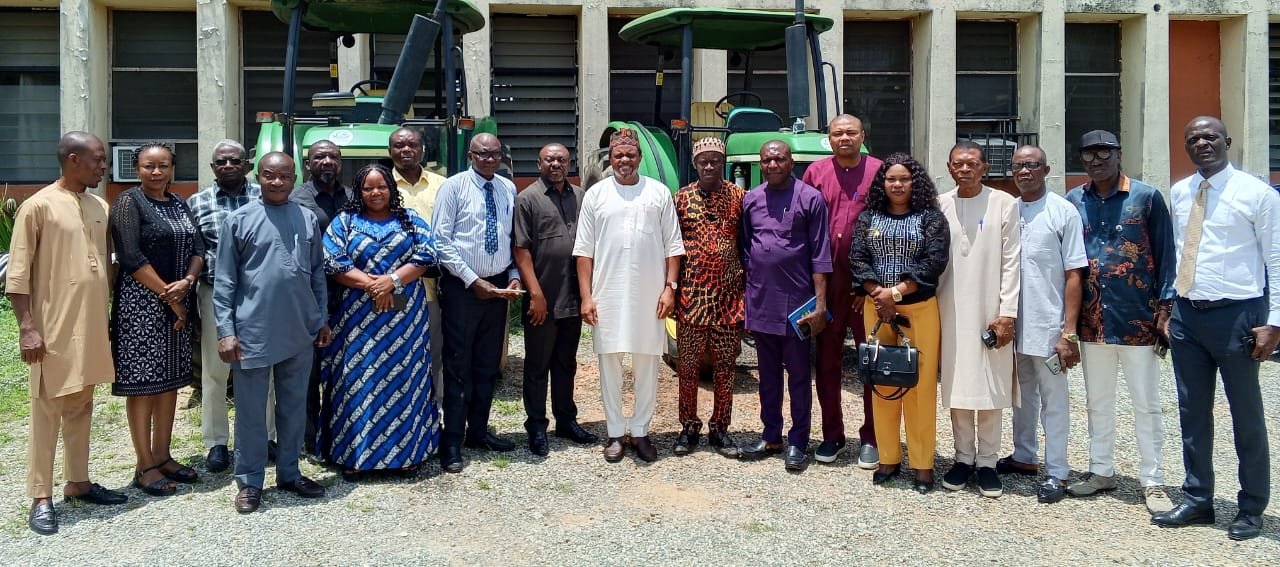
To address labor constraints and increase acreage, the Commissioner declared that the state is expanding its tractor-hiring scheme, stating that a second batch of 108 mini-tractors is scheduled for distribution this month.
“Furthermore, the state is tackling the perennial issue of flooding through the Sustainable Power and Irrigation for Nigeria (SPIN) Project. Supported by the Federal Government and the World Bank, the initiative will see 630 hectares of the Bansara–Ogoja rice belt developed for irrigation and flood control,” he said.
The guidelines also encourage cocoa farmers to adopt agroforestry by planting economic trees like avocado and bush mango to diversify income. Additionally, the Commissioner disclosed that improved tenera sprouted nuts are being offered at a subsidized rate of N100, adding that seedling distribution will begin in May 2026, with seven new cooperatives being formed to prepare the state for coffee exports. He said 250 farmers will undergo multiplication training this month to boost staple crop production.
Ebokpo also lauded the achievements of the FGN/NDDC/IFAD-assisted LIFE-ND Project, reporting that the project has generated over 4,370 jobs and produced 20,460 metric tonnes of food valued at N5.55 billion. With “Additional Financing” now in place, the Commissioner expressed optimism that the project is set to create another 3,626 jobs in 2026.
He expressed gratitude to Governor Bassey Edet Otu for his “visionary leadership” in transforming agriculture from a subsistence activity into a profitable venture.
“I urge all farmers to key into these initiatives and take advantage of the Government’s support to improve productivity and income,” he said. “Together, let us work towards a food-secure and prosperous Cross River State.”
Meanwhile, farmers seeking technical services or inputs are advised to contact the Ministry of Agriculture Headquarters in Calabar or their respective Local Government Agricultural Offices.