
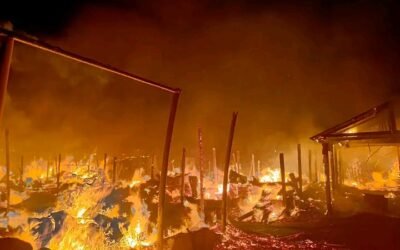








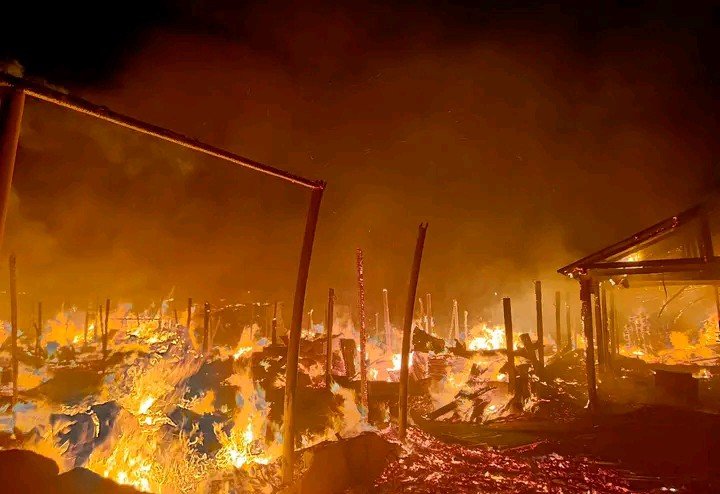
On the night of Friday, March 27, 2026, Calabar once again woke to the terrifying glow of uncontrolled flames. Around 8:45 p.m., a raging fire engulfed sections of the Akim Timber Market in Calabar Municipality, near the Akim Police Area Command. Shop owners and residents scrambled in the darkness to salvage what they could – planks, plywood, furniture, and livelihoods – while frantic calls to fire service went unanswered. Neither the Cross River State Fire Service nor the Federal Fire Service appeared.
Policemen from the nearby command and brave residents from the adjacent barracks did what they could, but the inferno consumed goods worth millions of naira before any meaningful containment. Reports indicate that even the University of Calabar’s fire truck eventually arrived, underscoring how the state’s own apparatus had failed yet again. This was no isolated tragedy. Just six days earlier, a gas explosion in Calabar South injured over 60 people, with firefighters nowhere to be found because state trucks – procured about 14 years ago – were reportedly under maintenance.
Earlier in January 2026, fires in areas like Goldie along Bassey Duke Street destroyed shops and properties worth millions, while an angry mob attacked a Federal Fire Service truck in frustration over delayed responses, injuring personnel and damaging equipment. By mid-January, the state had already recorded losses exceeding N3 billion from 18 fire incidents. The pattern is unmistakable: recurrent blazes in Calabar and its metropolis, met with chronically inadequate emergency response.
The Cross River State Government must treat these incidents not as unfortunate accidents but as a systemic crisis demanding immediate, decisive intervention. Timber markets like Akim are economic lifelines – employing hundreds of traders, supporting downstream industries in construction and furniture, and feeding families across the state. When flames devour wooden stalls packed with highly flammable materials, the human and economic toll is devastating. Traders who have invested their life savings return to ashes. Nearby residents abandon homes out of fear that the blaze will spread unchecked. Public trust in governance erodes further when citizens openly declare the state fire service “a big joke” that cannot respond even in daylight, let alone at night.
The root causes are glaring and long-standing. The state fire service operates with outdated, often non-functional equipment. Trucks acquired over a decade ago spend more time in maintenance yards than on the roads. Coverage is woefully insufficient for a growing metropolis like Calabar, where rapid urbanization has packed markets, residential areas, and commercial hubs into dense, poorly planned spaces. Many markets lack accessible roads for fire engines, functional hydrants, or basic fire extinguishers.
Coordination between state, federal, and institutional services (such as UNICAL’s) remains fragmented, while public awareness of fire prevention is minimal. Earlier attacks on firefighters reflect not malice alone but accumulated frustration from repeated failures.
These shortcomings are not abstract. They translate into lost lives, ruined businesses, and billions in economic damage. Markets across Nigeria have suffered similar fates, but states like Lagos have begun restructuring vulnerable zones, enforcing safety codes, and revitalizing emergency agencies. Cross River cannot afford to lag. Calabar’s status as a tourism and investment hub – bolstered by the governor’s vision – hinges on basic public safety. No investor or visitor will overlook a city where fires rage unchecked and responders are absent.
Strengthening fire emergency response requires urgent, multi-layered action from the Cross River State Government under Governor Bassey Otu. First, immediate procurement and deployment of modern fire trucks, foam tenders, and aerial platforms equipped for urban and market fires. The 2026 approved budget and supplementary allocations must prioritize this; promises of renovation and new equipment, already on record, must move from rhetoric to delivery within months, not years. Second, establish or upgrade fire stations strategically across Calabar – ensuring 24/7 manned units with reliable water supply, communication systems, and rapid-response protocols.
Third, enforce urban planning reforms: mandate fire hydrants and access routes in all markets, conduct safety audits of high-risk zones, and crack down on electrical hazards and illegal structures.
Training is equally critical. Firefighters need regular drills, modern protective gear, and incentives to retain skilled personnel. Community-level preparedness – volunteer brigades in markets, public education campaigns on extinguisher use and evacuation can bridge gaps until official help arrives. Integration with the National Emergency Management Agency (NEMA) and Federal Fire Service must be formalized through joint operations centers, shared resources, and clear command structures to eliminate the finger-pointing seen in recent incidents. Finally, introduce market and household-specific insurance schemes and swift compensation mechanisms for verified victims, reducing the cycle of destitution that fuels public anger.
Governor Otu’s administration has acknowledged inherited weaknesses in the fire service and initiated some reforms. Yet the events of the past two weeks – gas explosion followed by the Akim timber market inferno – demand bolder leadership. The people of Cross River deserve more than condolences and data compilation for victims. They need a fire service worthy of the 21st century: equipped, responsive, and proactive. Recurrent fires are not inevitable; they are the predictable outcome of neglect. Strengthening emergency response is not merely a budgetary line item – it is a moral imperative, an economic necessity, and a governance benchmark.
The smoke over Akim Timber Market has barely cleared. As traders survey their losses and Calabar braces for the next potential outbreak, the state government faces a choice: act decisively now to rebuild trust and resilience, or watch the cycle repeat with ever-greater cost to lives and prosperity. The time for half-measures is over. Calabar, and all of Cross River, must be made fire-safe, starting today.