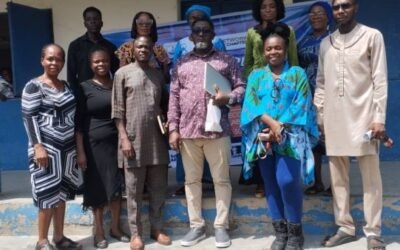
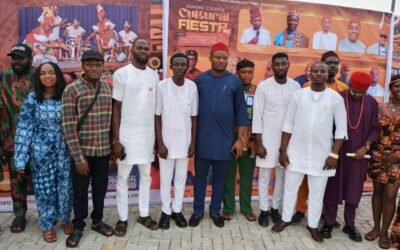
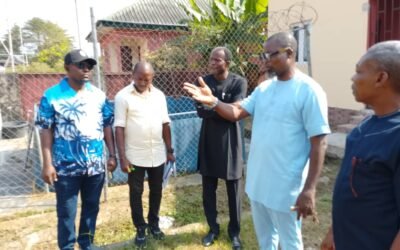


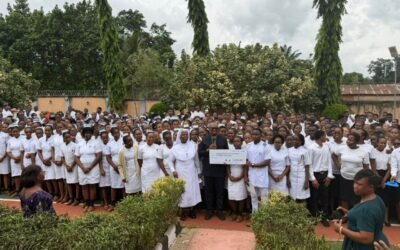
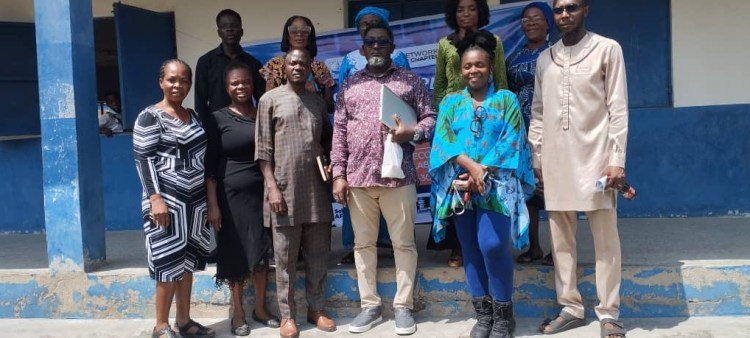
In commemoration of the 2026 World Water Day and the need to strengthen awareness on the link between water, hygiene, and gender equality in schools, Cross River Chapter of the WASH Media Network, recently took its hygiene campaign train to Government Secondary School, Anantigha, Calabar South local government area.
At the event which focused on promoting safe water practices, proper sanitation and responsible menstrual hygiene particularly among adolescent girls, over one hundred sanitary pads were distributed to students to boost menstrual hygiene management.
Coordinator of the WASH Media Network, Archibong Jeremiah, informed that the outreach was conceived to support schools in promoting hygiene education while ensuring that students learn in a safe, serene and conducive environment.
READ ALSO: Students lauds Soludo’s fight against cultism
He wondered that despite the school’s proximity to the local government council, as it shares a boundary with the council premises, it still lacks a conducive learning environment occasioned by inadequate water and sanitation facilities.
Expressing concern on the state of some schools in remote areas, Jeremiah argued that, “if a school located close to government authorities could face such challenges, the conditions in schools situated farther away might be even more critical.”
Commenting, Secretary of the WASH Media Network, Mrs Abenmire Williams, who spoke extensively on “safeguarding menstrual hygiene habits for both boys and girls,” enjoined boys to desist from stigmatising female students during menstruation, stressing that “such behaviour could discourage girls from attending school or participating fully in academic activities.”
She also encouraged girls to be confident and proactive in discussing menstrual health challenges with trusted adults including teachers and parents, whenever the need arises.
Representative of the Borehole Drillers Association of Nigeria (BORDAN), Mr Augustine Oyongha, educated students on how to safely manage water sources and protect water infrastructure within their communities.
He tutored the students on responsible and effective water usage, maintenance of boreholes and the importance of safeguarding public water facilities to ensure sustainability.
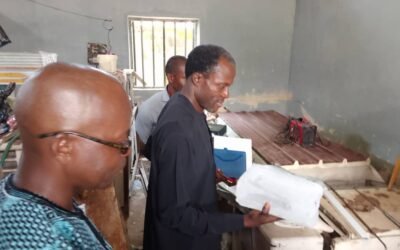
Oyongha displayed some testing kits and educated the participants on their uses, warning that, “when the water source is contaminated, you are eating faeces.”
Earlier, Principal of the school, Mrs Valarie Ekpenyong Henshaw, expressed appreciation to the WASH Media Network and its partners for selecting the school as a beneficiary of the outreach.
She noted that the institution, which has been in existence for about 35 years, faces severe water challenges thereby threatening the required hygiene standards.
Henshaw lamented that although the school previously benefited from a borehole project provided by the Cross River Rural Water Supply and Sanitation Agency (RUWATSSA), the facility stopped functioning after about two years, subjecting the school to the dire need of a reliable water source to support its hygiene and sanitation activities.
It would be recalled that, as part of the World Water Day activities, the Network had organised a two-day radio town hall meeting to deepen public engagement on water, sanitation, and gender-related issues in the state.
The town hall meeting, which was aired on Sparkling 92.3 FM and HIT 95.9 FM in Calabar, featured key stakeholders in the water and sanitation sector who discussed the theme, “Water and Gender – Where Water Flows, Equality Grows.”
The hygiene education campaign which was interactive saw the School Vice Principal (Administration), Mrs Felicia Archibong, commending the Group and its partners for touching the lives of the students, as well as the distribution of sanitary pads to female students, a gesture, she reaffirmed would reinforce the importance of menstrual hygiene management and sustained support for school-based WASH interventions.