









By Kingsley Agim
Three years after Governor Bassey Edet Otu assumed office on the strength of his People First Agenda, few sectors provide a clearer measure of the administration’s performance than healthcare. Once constrained by ageing infrastructure, workforce shortages, inadequate financing, and uneven access to quality medical services, Cross River State’s health sector is today witnessing a transformation that is both visible and measurable.
From remote rural communities to major urban centres, the administration has pursued a comprehensive strategy to rebuild public confidence in the healthcare system. New and revitalized health facilities are emerging across the state; critical medical infrastructure is being expanded; healthcare personnel are receiving renewed support; innovative financing mechanisms are advancing the cause of universal health coverage; and digital health solutions are strengthening service delivery. Disease prevention, immunization, nutrition, and epidemic response programmes are reaching more citizens than ever before. The result is a healthcare system that is increasingly responsive to the needs of the people and better positioned to meet contemporary public health challenges.
What makes this transformation particularly noteworthy is that it extends beyond the construction of hospitals and the procurement of medical equipment. It reflects a deliberate effort to strengthen every layer of the healthcare ecosystem; from primary healthcare and maternal and child health services to health insurance, disease surveillance, workforce development, health commodity management, nutrition, and the deployment of innovative technologies such as drone-enabled vaccine delivery. At the same time, the state has intensified responses to HIV/AIDS, tuberculosis, malaria, Mpox, cholera, Lassa fever and other public health threats through strengthened partnerships, revived counterpart funding arrangements, and improved institutional coordination.
READ ALSO: Welfare of Anambra school child my major priority – Commissioner for Education
At the centre of this effort is the Health Cluster, comprising the Ministry of Health, the Cross River State Primary Health Care Development Agency (CRSPHCDA), the Basic Health Care Provision Fund (BHCPF), the Nutrition and Immunization Programme, the Cross River State Health Insurance Agency (CRSHIA), and the Cross River State Agency for the Control of AIDS (CRSACA). Working in concert, these institutions have implemented reforms and interventions that are redefining healthcare delivery across the state.
The story of Cross River’s health sector over the last three years is therefore not merely one of projects completed or programmes executed. It is the story of a government investing in human capital, strengthening public institutions, expanding access to healthcare, and laying the foundation for healthier and more productive communities. As this edition of Sectorial Strides beams its searchlight on the Health Cluster, the evidence points to a sector that has emerged as one of the strongest pillars of Governor Otu’s People First Agenda, delivering tangible benefits today while building a stronger healthcare system for future generations.
Rebuilding Healthcare Infrastructure Across the State
One of the most visible achievements of the Otu administration has been its aggressive investment in healthcare infrastructure.
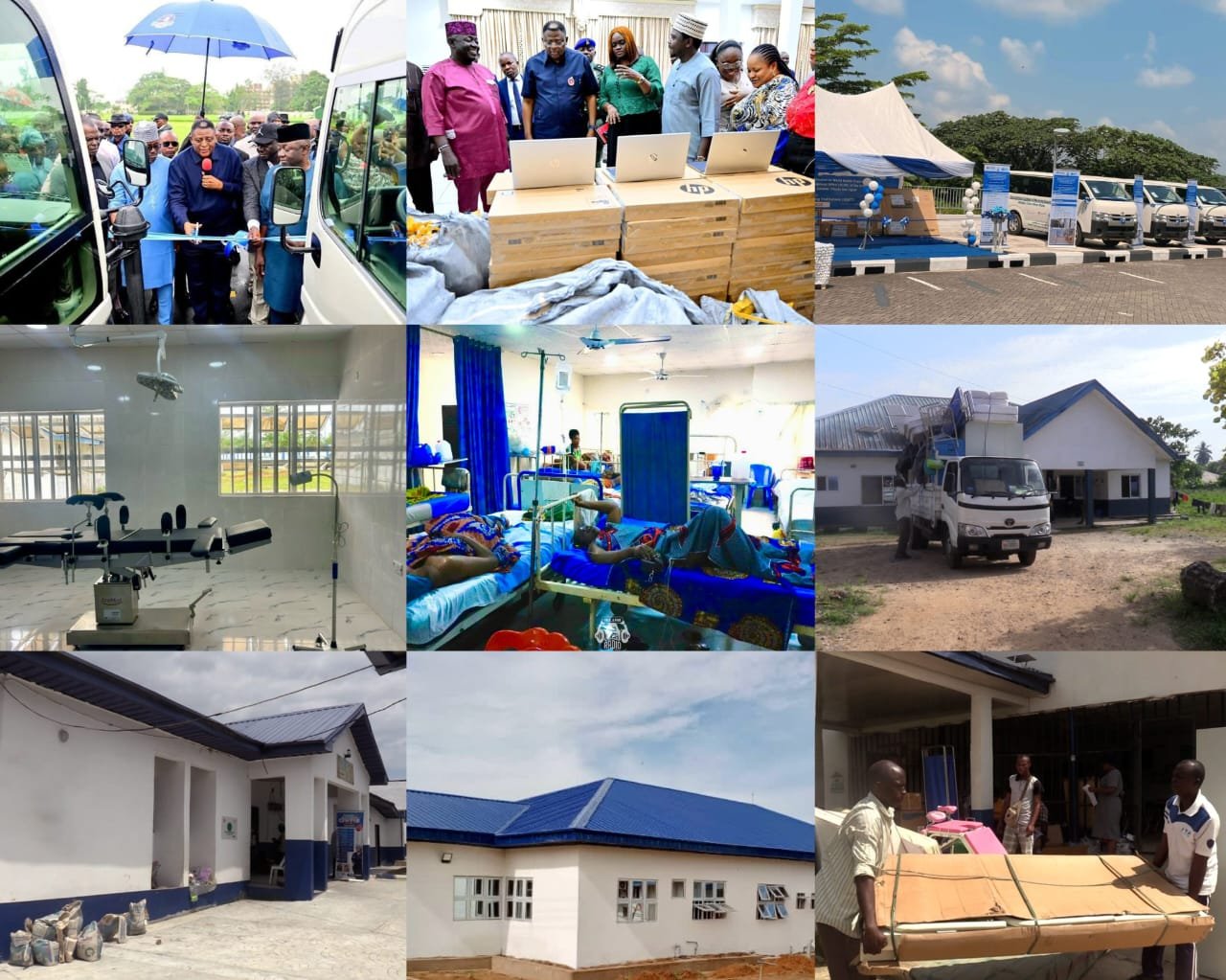
The government has upgraded 196 Primary Healthcare Centres under the Basic Health Care Provision Fund and revitalized an additional 96 Primary Healthcare Centres across the state, all awaiting commissioning. These interventions have significantly expanded access to healthcare services, particularly in rural and underserved communities.
Beyond physical rehabilitation, the revitalization programme has transformed many of these facilities into comprehensive primary healthcare hubs equipped with staff quarters, antenatal and obstetric units, laboratory services, inpatient wards and the human resources required to sustain round-the-clock healthcare delivery.
The administration has also embarked on a comprehensive plan to build new hospitals in Local Government Areas with limited secondary healthcare facilities while upgrading existing institutions to provide effective referral support for the expanding primary healthcare system. Construction work is progressing at the General Hospital, Ikom, while the General Hospital, Obudu, has been resuscitated and awaits commissioning. The administration has also initiated plans for the completion of previously abandoned General Hospital projects in Akpabuyo, Etung and Boki, further strengthening the state’s secondary healthcare referral network.
Innovative healthcare delivery for vulnerable populations has equally received attention. The Palliative Healthcare Centre at Nyanghasang, Calabar, has been completed and commissioned, while work is ongoing in six additional palliative healthcare facilities across the state. The Palliative Healthcare Programme reflects Governor Otu’s commitment to reaching vulnerable populations, particularly pregnant women, children under five years of age, and elderly citizens above 70 years, through the provision of free and subsidized healthcare services across the state’s Local Government Areas.
The newly commissioned Fistula Complex Centre at General Hospital Calabar has strengthened maternal healthcare services by providing specialized treatment, rehabilitation and support for women living with obstetric fistula.
To improve emergency and critical care services, the administration completed and commissioned oxygen plants at General Hospital Calabar and General Hospital Ogoja, while another oxygen plant at the Comprehensive Health Centre, Ikom, has been completed and awaits commissioning. These facilities ensure uninterrupted oxygen supply and significantly enhance the state’s capacity to manage emergencies and critical illnesses.
Government has also completed the Universal Health Coverage Coordinating Centre at General Hospital Calabar, which awaits commissioning and is expected to serve as a strategic hub for healthcare financing and health insurance coordination across the state.
Other notable achievements include the commissioning of the upgraded State Drugs and Health Commodities Warehouse, the commissioning of Comprehensive Primary Healthcare Centres at Akor and Ndebeji in Akamkpa Local Government Area, and the revitalization and commissioning of the Tuberculosis Reference Laboratory at Dr. Lawrence Henshaw Memorial Hospital, Calabar.
These investments complement the revitalization of 82 healthcare facilities under the World Bank-supported IMPACT Project and underline the administration’s determination to build a resilient health system anchored on modern infrastructure, improved service delivery, and equitable access to care.
Strengthening Healthcare Through the Ministry of Health
Beyond infrastructure, the Ministry of Health has led several reforms aimed at strengthening healthcare governance, planning, and service delivery.
The State developed the Cross River State Health Sector Strategic Blueprint and Annual Operational Plans, improving planning, budgeting, monitoring, and accountability across the health sector. Workforce management systems have been strengthened through the automation of the Health Workforce Registry and the review of the Human Resource for Health Policy and Strategic Development Plan.
To bridge manpower shortages, government recruited doctors, nurses, pharmacists, midwives, medical laboratory scientists, Community Health Extension Workers and other healthcare professionals. In a landmark intervention, more than 2,200 healthcare workers were recruited to address critical workforce gaps across healthcare facilities statewide.
Recognising that healthcare systems are only as effective as the professionals who sustain them, the administration has improved workforce welfare through the full implementation of the Consolidated Medical Salary Structure (CONMESS) for medical doctors and salary enhancements for other categories of health workers. These measures have helped improve morale, retention and service delivery.
More than 2,500 healthcare workers have also benefited from capacity-building programmes across multiple thematic areas, while training on Electronic Medical Records has enhanced healthcare data management, confidentiality and efficiency.
The administration has equally made strategic investments in healthcare manpower development through the upgrading and accreditation of Schools of Nursing in Calabar, Itigidi, Ogoja and Obudu to full-fledged Colleges of Nursing Sciences. To strengthen training and mobility for students and faculty, the state government donated three coaster buses to nursing institutions across the state, while the World Health Organization complemented the effort with the donation of three 12-seater Toyota Hiace buses. These interventions have significantly enhanced learning, clinical exposure, and institutional capacity, while reinforcing the state’s commitment to producing the next generation of healthcare professionals.
The Ministry further strengthened health sector coordination through regular Health Partners Forum meetings involving organizations such as the World Health Organization, UNICEF and the Federal Ministry of Health. These partnerships have enhanced resource mobilization, reduced duplication of interventions and improved healthcare outcomes.
The review of the State Essential Medicines List, procurement of maternal health commodities, establishment of the Health Research Ethics Committee, strengthening of disease surveillance systems, and improved monitoring and evaluation mechanisms have further enhanced healthcare governance and service delivery.
Taking Healthcare to the Grassroots: The CRSPHCDA Success Story
The Cross River State Primary Health Care Development Agency has remained at the forefront of healthcare delivery, bringing essential services directly to communities across the state.
Through routine immunization programmes implemented in more than 1,034 healthcare facilities, the Agency has sustained high vaccination coverage while reducing the incidence of vaccine-preventable diseases. Weekly immunization outreach sessions have ensured that even hard-to-reach communities benefit from life-saving healthcare services.
The Agency has strengthened maternal healthcare through the deployment of one Skilled Birth Attendant to each of the 196 Primary Healthcare Centres supported under the IMPACT Project. This intervention has significantly improved antenatal care, institutional deliveries, postnatal care and the management of maternal and neonatal complications.
The distribution of 9,800 antenatal kits and 9,800 postnatal kits across the state’s 18 Local Government Areas has encouraged increased facility-based deliveries and improved maternal and newborn outcomes.
More than 1,700 frontline healthcare workers have received specialized training under various programmes, improving service delivery standards and strengthening the quality of care across health facilities.
The Agency has also enhanced healthcare delivery through the procurement and distribution of laptops, strengthening digital reporting systems, disease surveillance, monitoring and healthcare data management.
Expanding Free and Affordable Healthcare Through BHCPF
One of the most impactful interventions of the present administration has been the effective implementation of the Basic Health Care Provision Fund.
Through BHCPF, financial autonomy has been established for 196 Primary Healthcare Centres and expanded to 333 facilities across the state. Quarterly funding support has enabled healthcare facilities to provide more consistent and quality healthcare services.
The programme engaged 196 Skilled Birth Attendants and 40 Midwives while providing specialized training on Basic Emergency Maternal and Newborn Care. These interventions have strengthened maternal and newborn healthcare services and contributed significantly to improved outcomes for mothers and children.
BHCPF has also expanded access to free healthcare services for vulnerable groups, particularly the elderly and economically disadvantaged citizens, while increasing patient turnout and strengthening community participation in healthcare programmes.
Its quality assurance mechanisms, community engagement initiatives and sustained funding model have become critical pillars supporting primary healthcare delivery throughout the state.
Winning the Battle Against Preventable Diseases
The Nutrition and Immunization Programme represents one of the state’s most successful public health interventions.
Between 2023 and 2026, more than 832,000 children under five received Vitamin A supplementation, while over 706,000 children benefited from deworming programmes. These interventions have significantly improved child health indicators and reduced the prevalence of nutrition-related illnesses.
Perhaps most impressive is the dramatic reduction in malnutrition rates. Through nutrition screening and the distribution of Ready-to-Use Therapeutic Food, severe acute malnutrition rates dropped from 20.5 percent in 2023 to 1.6 percent in 2024.
Cross River has also become a national reference point for immunization innovation. Through partnership with Zipline, vaccines are delivered by drone technology to hard-to-reach communities, helping the state achieve remarkable immunization outcomes, including approximately 95 percent coverage rates in several vaccination campaigns.
The state recorded 99 percent coverage in Human Papilloma Virus vaccination among eligible girls, while measles vaccination campaigns achieved full coverage among target populations. Zero-dose vaccination programmes also reduced the number of unvaccinated children from 70,913 in 2024 to 18,205 in 2025.
The introduction of Mpox vaccines, intensified polio vaccination campaigns, Maternal, Newborn and Child Health Weeks, breastfeeding promotion campaigns and routine immunization outreach programmes have further strengthened public health outcomes across the state.
Advancing Universal Health Coverage Through CRSHIA
The Cross River State Health Insurance Agency has played a pivotal role in expanding healthcare access and reducing out-of-pocket expenditure for citizens.
Since 2023, formal sector enrollment has increased from 8,506 to 17,170 beneficiaries, representing growth of more than 100 percent. Enrollment under the Basic Health Care Provision Fund increased from 24,300 to 39,340 beneficiaries, while the informal sector programme expanded from zero enrollment to more than 3,000 beneficiaries.
These gains have translated into increased healthcare utilization. Access to healthcare services under the BHCPF programme rose by 267 percent, while service utilization increased by 278 percent during the review period.
The Agency has accredited healthcare facilities across the state, distributed thousands of beneficiary identification cards, conducted quality assurance exercises and ensured timely capitation payments to participating healthcare providers.
These interventions have strengthened Universal Health Coverage implementation while improving financial protection for vulnerable populations and bringing affordable healthcare within reach of more Cross Riverians.
Sustaining the Fight Against HIV/AIDS Through CRSACA
The Cross River State Agency for the Control of AIDS (CRSACA) has strengthened both its institutional capacity and programme delivery. The Agency now operates from a modern administrative complex commissioned by Governor Otu, providing a more conducive environment for planning, coordination and implementation of HIV response programmes.
The Agency developed and implemented the Cross River State HIV/AIDS Strategic Plan and successfully integrated HIV services into the state’s health insurance programme, ensuring sustainability and improved access to care.
Notably, the state has maintained an HIV prevalence rate of 1.8 percent during the review period, reflecting sustained prevention and treatment efforts.
Through annual World AIDS Day campaigns, International Condom Day activities, community outreach programmes and cultural festival interventions, thousands of residents have been reached with HIV prevention messages and services.
The Calabar WISE-UP Carnival Campaign alone reached approximately 87,500 people with sexual and reproductive health education, HIV awareness messages and prevention services.
The Agency, in collaboration with the Ministry of Health, has also positioned Cross River among the leading states implementing Lenacapavir (LEN-PrEP), a groundbreaking long-acting HIV prevention intervention expected to strengthen protection for vulnerable populations.
Additionally, CRSACA has strengthened its institutional capacity through expanded office facilities, procurement of modern ICT equipment and improved stakeholder coordination mechanisms.
Equally significant is the administration’s commitment to institutional reforms. A stronger legal framework for healthcare delivery has emerged through the operationalization of the State Drugs and Health Commodities Management Agency, the strengthening of the Hospital Management Board framework, and ongoing legislative efforts on Public Health Security, Health Quality Assurance and Anti-Quackery measures. These reforms are designed to improve healthcare quality, affordability, accountability and long-term sustainability.
Taken together, these achievements represent far more than isolated projects or statistical milestones. They reflect a deliberate and coordinated effort to build a resilient, accessible and people-centred healthcare system capable of meeting the needs of present and future generations.
From revitalized health centres in rural communities to modern oxygen plants in public hospitals; from expanded health insurance coverage to innovative drone-supported vaccine delivery; from strengthened maternal healthcare services to improved responses to HIV/AIDS, tuberculosis, malaria and emerging disease outbreaks, the evidence of transformation is visible across every component of the health sector.
Three years into Governor Bassey Edet Otu’s administration, healthcare has emerged as one of the clearest expressions of the People First Agenda. While challenges remain, the progress recorded thus far demonstrates a commitment to ensuring that quality healthcare is no longer the privilege of a few, but a right increasingly accessible to all Cross Riverians.
The strides recorded between 2023 and 2026 are therefore not merely entries on a government scorecard; they are investments in human lives, community wellbeing and the future prosperity of Cross River State. As the state continues its journey toward universal health coverage and improved health outcomes, the foundations being laid today provide compelling reasons for optimism that Cross River’s healthcare future will be healthier, stronger and more inclusive than ever before.