





By Our Reporter
For many young people, the first encounter with music is informal. A child may discover an instrument at church, learn a few chords from a friend or develop an interest after watching a performer on stage.
But turning that interest into musicianship requires something more structured.
In Lagos, the Saxophone Music Academy, popularly known as SAMAC, has spent years building that structure around music education, giving students a pathway through which an early interest in music can develop into formal training.
READ ALSO: Sports Commission Chairman Applauds Duke’s Commitment to Young Table Tennis Players
Founded in 2007 by Imọlẹayọ Balogun, the academy began as a small music school with a particular focus on saxophone training, jazz improvisation and music examinations. Over time, its programme expanded beyond the instrument that gave the school its name.
Today, students at SAMAC can study a range of instruments across strings, brass, woodwind, percussion and piano, alongside selected traditional African instruments.
The expansion reflects a broader idea of what music education can be.
Rather than treating instrumental performance as an isolated skill, the academy introduces students to areas such as music theory, harmony, composition, arranging, jazz studies, improvisation and music research.
For a young musician, the difference can be significant. Learning an instrument teaches technique, but understanding harmony, composition and musical structure creates a wider foundation for interpreting and creating music.
SAMAC’s approach is built around progression.
Its Basic School provides training from Grade 1 to Grade 8, with students working through structured levels of study. The programme allows students to enter at different points during the year and progress after completing the required period of training.
The model gives students something more tangible than simply attending music lessons. Each stage represents another level of development, allowing students to see their progress while preparing for examinations and more advanced study.
The academy’s curriculum extends across a wide selection of instruments.
Students can learn the violin, viola, cello, double bass, trumpet, trombone, clarinet, flute, oboe, saxophone, drums and piano. There is also room for African instruments such as the Ọjá, an Igbo flute, and the Gángan, the Yoruba talking drum.
That combination of Western and African musical traditions gives the academy a wider educational scope. Students are introduced to different musical languages while developing technical knowledge on their chosen instruments.
For those who want to pursue music beyond the foundational grades, SAMAC also operates a Diploma School.
The diploma programme provides more advanced training and requires students to major in one instrument while taking another as a minor. Students can pursue either classical or contemporary and jazz studies.
The programme goes beyond performance. Students study Western harmonic principles, composition and arranging, jazz improvisation, writing and music research, as well as African music studies.
It is an approach that reflects the changing demands of a professional musician.
A modern musician may perform, compose, arrange, teach, research or work across several musical styles. Training therefore needs to extend beyond the ability to perform a piece correctly.
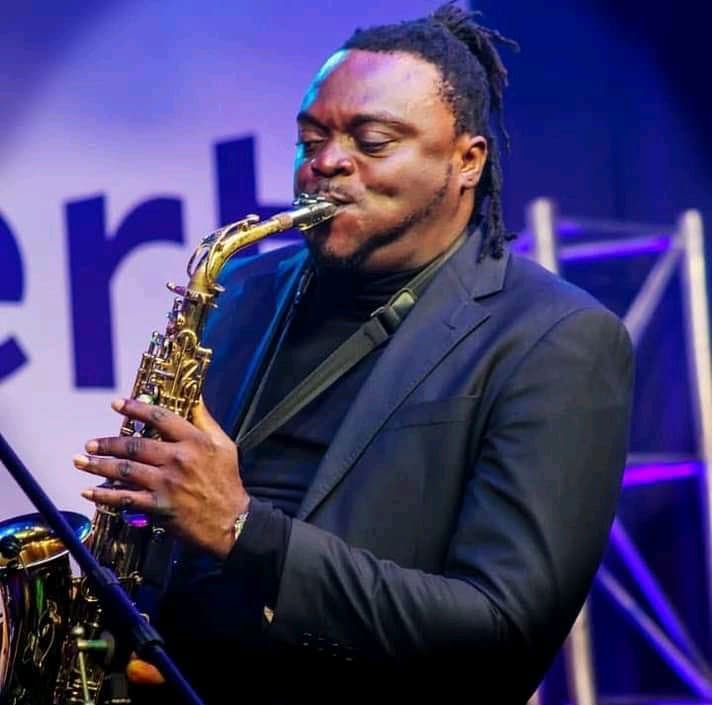
At the centre of SAMAC’s educational direction is its founder and Director of Studies, Amb. Imọlẹayọ Balogun.
A jazz saxophonist, educator and researcher, Balogun’s own musical journey has combined contemporary and classical music. He studied contemporary music at Peter King College of Music in Badagry before attending the MUSON Diploma School for classical music.
He later obtained bachelor’s and master’s degrees in Music from the University of Lagos, while his professional experience has included performances at jazz festivals in Nigeria and abroad.
His work as an educator has also taken him into formal music institutions. He has taught saxophone and clarinet at the MUSON Diploma Department and has been involved in directing the school band. At Peter King College of Music, his teaching has included saxophone technique and workshops covering jazz, highlife, salsa, reggae, traditional music and choir.
Those experiences inform the breadth of training offered at SAMAC.
Students are exposed not only to instrumental technique but also to music theory, Western harmony, jazz studies, improvisation, band culture and research.
The academy’s development over the years also mirrors the growth of its original ambition.
What began in 2007 as a one-room school has developed into a broader music education institution. Its move to a dedicated centre on Kareem Laka Street, Egbeda Akowonjo, Lagos, in 2009 provided additional space for the academy’s expanding programmes.
More than a decade after its establishment, the central idea remains straightforward: give aspiring musicians a structured environment in which they can learn, practise and progress.
For some students, that journey may begin with learning their first notes. For others, it may eventually lead to examinations, diploma-level study or professional performance.
Either way, the philosophy is built around progression.
At Saxophone Music Academy, music education is treated not simply as an extracurricular activity, but as a discipline that requires patience, technical knowledge and continuous practice.
In an industry where many musicians begin their journeys informally, SAMAC represents another route: one in which talent is developed through structured learning, different musical traditions are studied side by side, and young performers are given the foundation to understand music beyond the stage.