


By Kelvin Obambon
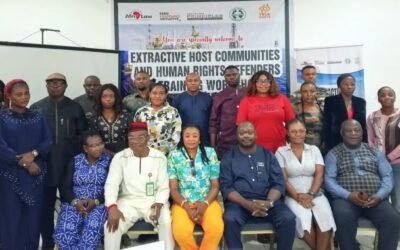
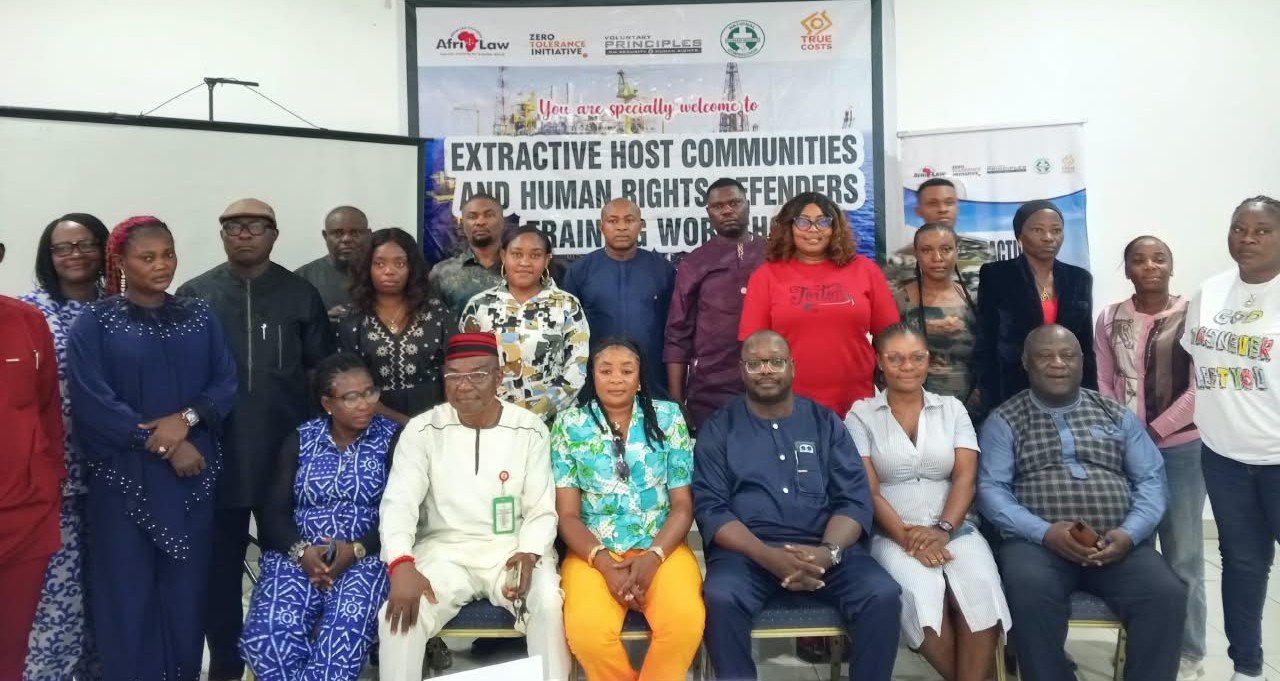
The African Law Foundation (AfriLaw) and the National Human Rights Commission (NHRC), alongside other key civil society partners, have organized a training workshop aimed at empowering host communities and human rights defenders in extractive host communities in Cross River State.
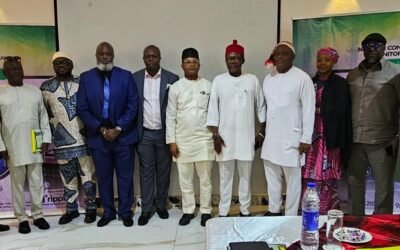
The workshop, held on Thursday at Monty Suites in Calabar, brought together representatives from extractive host communities, civil society organizations, and the media to address recurring human rights violations, environmental degradation, and security concerns linked to extractive activities of corporate entities across the state.
Dr. Tony Ojukwu, Executive Secretary of the National Human Rights Commission in his remarks, emphasized the importance of translating international human rights frameworks into actionable safeguards for local populations.
READ ALSO: NCDMB organizes capacity building workshop for media stakeholders in Anambra
“Today we gather not just for a ceremony, but to reaffirm our collective commitment to the protection of human rights in Nigeria’s extractive sector,” Ojukwu stated. “Nigeria’s extractive sector remains central to our economy, yet host communities continue to face complex challenges: environmental impact, security concerns, displacement, and questions of participation, informed consent, and accountability.”
Ojukwu who was represented by the Cross River State Coordinator of the Commission, Remi Ajuga, highlighted the severe environmental toll experienced by regions like the Niger Delta due to chronic oil spills, gas flaring, and the pollution of farmlands and water sources – factors that directly undermine rights to health, food, and a clean environment. He further noted that Human Rights Defenders (HRDs) operating in these spaces frequently encounter threats, systemic barriers, and limited access to justice.
He restated NHRC’s commitment to ensuring the implementation of the United Nations Guiding Principles on Business and Human Rights (UNGPs) within the extractive industry, stressing that businesses carry a direct responsibility to respect human rights while communities possess the right to participate in decisions impacting their lives.
Reaffirming this position, Barr. Chinwike Okereke, Executive Director of African Law Foundation, declared that safeguarding defenders is fundamental to achieving broader human rights and national development goals.
“Understanding that the protection of human rights defenders is a human rights in itself; human rights is tantamount to development. There cannot be sustainable development if human rights is not fulfilled and achieved,” Okereke said. “The promoters, the defenders of human rights need to be protected and their rights need to be preserved because in ensuring their preservation and protection, we can now be talking about achieving human rights in the country.”
He revealed that the training workshop in Calabar represents the eighth leg of a training project spanning all nine states of the Niger Delta region. The initiative, according to him, seeks to build a resilient network of defenders equipped with knowledge of legal instruments to protect themselves against retaliation, unlawful arrest, threats, or detention.
The workshop was organized in collaboration with the Zero Tolerance Initiative, the Voluntary Principles on Security and Human Rights, and the True Costs Initiative.
Several participants at the workshop commended AfriLaw and its partners for organizing the training, describing the sessions as both timely and an eye-opener for grassroots defenders navigating complex legal and security landscapes in the state. They however appealed for further training on Human Rights Due Diligence (HRDD) and Human Rights Impact Assessment (HRIA) to broaden their knowledge and equip them with contemporary skills to tackle evolving issues in the human rights ecosystem.