




By Kelvin Obambon
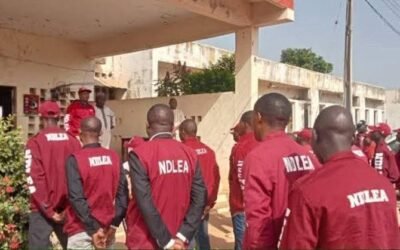
The Nigeria Union of Journalists (NUJ), Cross River State Council, has expressed deep concern over media reports regarding a recent encounter between operatives of the National Drug Law Enforcement Agency (NDLEA) and Prince Alobi, a staff member of Radio Nigeria (Canaan City FM 99.5), in Calabar.
In a statement signed by the Chairman of the Cross River State Council, Comrade Archibong Bassey, on Wednesday, the Union cautioned journalists and media houses against sensationalism, clarifying that the individual involved is not a journalist.
While acknowledging that the incident was regrettable, the Council warned against narrative framing that portrays the encounter in a grim light or falsely labels the staff member as a journalist.
READ ALSO: Coastal Highway: Workers protest demand expatriates’ sack, Liaison Officer’s reinstatement
“For clarity, the individual in question is not a journalist and does not belong to the NUJ,” Comrade Bassey stated. “The Council therefore urges journalists and media organisations to exercise caution in their reportage and avoid presenting the incident in a way that could mislead the public into believing that a member of the Union was involved.”
The Union emphasized that employment within a broadcasting station or media house does not automatically confer professional journalism status or union membership.
Addressing the broader implications of the reporting surrounding the incident, the Council urged media practitioners to adhere strictly to core ethical standards – accuracy, balance, verification, and responsible presentation.
“Journalism demands accuracy, balance, verification and responsible presentation of facts, particularly when reporting incidents involving law enforcement agencies,” the statement noted, urging reporters to avoid “whipping up narratives that could inflame public sentiment or create an exaggerated impression of the situation.”
The NUJ also issued a safety reminder to media personnel operating in high-risk situations, stressing that professional identification does not offer immunity during law enforcement operations.
“Practitioners should not put themselves in harm’s way under the assumption that identifying with the media automatically protects them from the risks associated with confrontations,” the Chairman advised, adding that where situations become dangerous, personal safety must take precedence.
Regarding allegations of assault or misconduct stemming from the confrontation, the Union called for an impartial inquiry rather than trial by media. The Council maintained that any claims should be subjected to proper investigation, allowing all affected parties a fair opportunity to present their accounts.
Reaffirming its commitment to ethical practice and balanced reporting, the Cross River State Council called on media organisations to foster constructive relations with security agencies while prioritizing factual accuracy over sensational headlines.