





By Kelvin Obambon
Cross River State has restated its commitment to transforming agriculture into a commercially viable sector, citing major milestones recorded under its Project Grow Initiative since inception in November 2023.
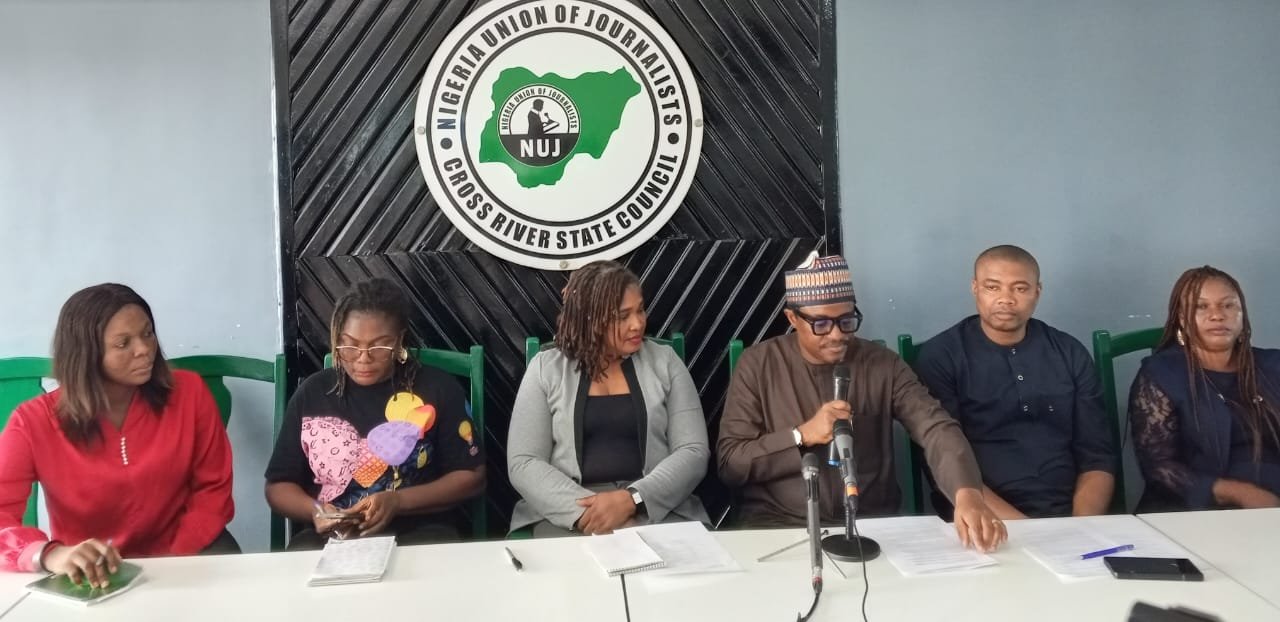
Speaking at a press conference held on Monday at the Ernest Etim Bassey Press Center in Calabar, the Commissioner for Agriculture and Irrigation Development, Hon. Johnson Andiambey Ebokpo, said the administration of Governor Bassey Edet Otu is deliberately shifting from subsistence farming to investment-driven agribusiness.
“Agriculture remains one of the most powerful tools available to any government seeking to achieve food security, create jobs, industrialize, stimulate rural economies, and improve livelihood,” Ebokpo said.
READ ALSO: Chief Martha Agba PhD, Appointed National Director of Support Group in City Boy Movement
“Our mission is to build a modern, commercially viable, and investment-driven agricultural economy that creates value across the entire chain, from production and processing to marketing, distribution, and export.”
He noted that while Cross River has favorable climate, natural resources, and a resilient farming population, past challenges included weak market systems, limited finance, and poor value chain linkages. Project Grow was designed as a Special Purpose Vehicle to address those gaps.
“Together, we can unlock the immense agricultural potential of Cross River State and transform it into tangible prosperity for our people,” Ebokpo added, urging stakeholders to support Governor Otu’s agricultural vision.
The Project Director, Denis Ikpali outlined the project’s progress across all 18 Local Government Areas, with active clusters in Odukpani, Ogoja, Obubra, Yakurr, Yala, Ikom, Obudu, and Obanliku.
According to him, primary value chains include rice, maize, cassava, animal fodder, and aquaculture. Secondary chains cover soybean, cowpea, wheat, sorghum, groundnut, and orange flesh sweet potato.
He stated that so far over 5,300 farmers have been trained with AFOS, a German-funded NGO, on Good Agricultural Practices, financial literacy, and modern farming methods.
Ikpali explained that 450 hectares of maize and soybean were cultivated in the 2025 farming cycle, while 110 farmers and extension agents were trained with Flour Mills of Nigeria on GAP compliance. He added that 28 agribusinesses and restructured cooperatives had been created, generating 391 direct jobs across value chains.
The director described Project Grow as a “Market Systems Development initiative deliberately designed not just to increase production, but to address structural gaps in agriculture, particularly around markets, aggregation, financing, input access, and reliable demand.”
He disclosed that a landmark offtake agreement with Flour Mills of Nigeria for 2,000 metric tons of soybeans and 20,000 metric tons of maize worth an estimated N18 billion would give local agribusinesses a secure market. The project, according to him, has also delivered its first test batch of 11.4 metric tons of soybeans to Flour Mills in Ibadan.
To tackle financing, Ikpali explained that Project Grow’s Cash Back Guarantee Scheme has facilitated over N3 billion in agricultural loans, with about N1.5 billion expected for the 2026 season. The scheme is projected to unlock N150 billion in cumulative funding over the next few years.
Through partnership with the National Agricultural Development Fund, 2,000 hectares of rice are planned for 2026 via input loans. The state also approved plans for a Centre of Excellence for agricultural training, an Indigenous Community Seed Multiplication Centre, and a urea plant to improve fertilizer access.
Soybean production alone is projected to cover 1,000 hectares across participating communities next season. Despite challenges like inflation, high transport costs, and commodity price fluctuations, Ikpali said the project is using data-driven market analysis and stronger partnerships to stay on course.
Project Grow reaffirmed its commitment to building a resilient agricultural system that delivers real economic value and expands opportunities for farmers and agribusinesses in the state.