








By Sylvia Okoi
The Cross River State Government has unveiled the “Calabar Resilience Agenda 2026,” a comprehensive sustainability roadmap aimed at tackling urban flooding, promoting clean transportation, restoring degraded ecosystems, and strengthening climate resilience across the state.
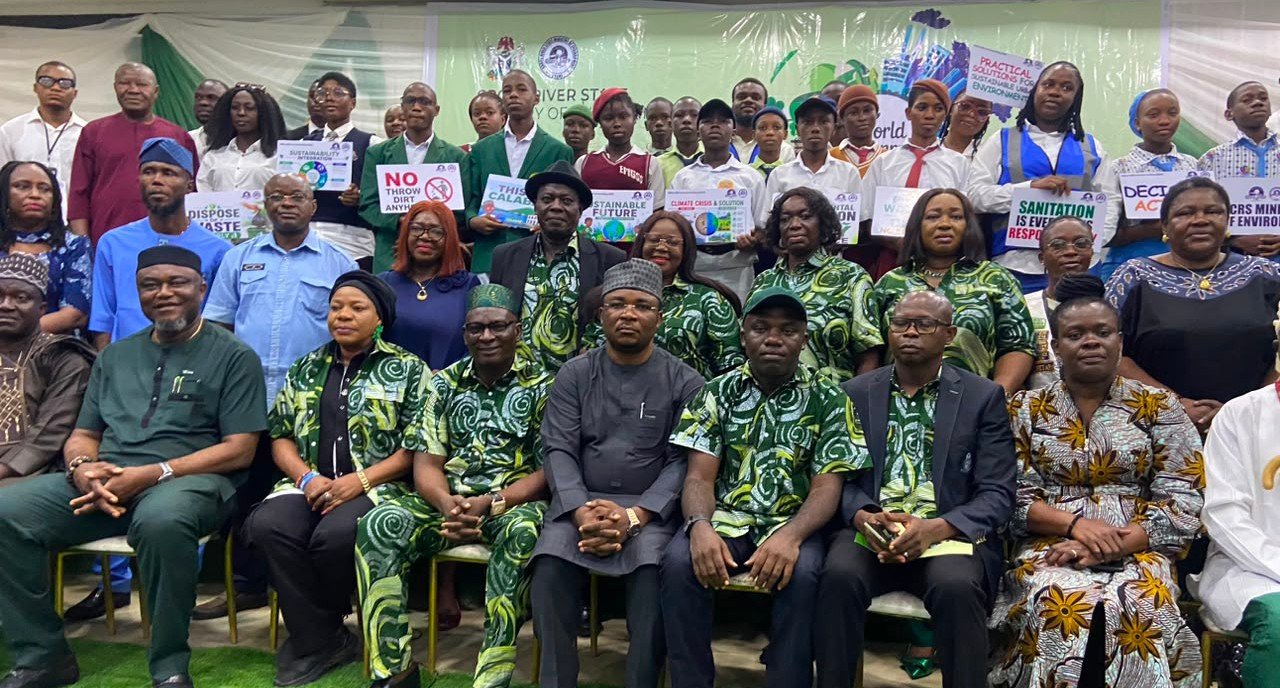
The initiative was launched on Friday during the 2026 World Environment Day celebration held at the Metropolitan Hotel, Calabar. The event was themed “Urbanization and Climate Change: Building Resilient Cities for a Sustainable Future.”
Speaking at the event, the Governor of Cross River State, Bassey Edet Otu, said the state must embrace sustainable urban development to address the growing challenges posed by climate change.
READ ALSO: Hookup girl smashes man head with beer bottle
Represented by the Vice Chairman of the State Planning Commission, Bong Duke, the governor noted that while the state continues to experience rapid population growth and economic expansion, it must guard against unplanned urbanization, which contributes to flooding, environmental degradation, and rising temperatures.
“Cross River State is known as Nigeria’s greenest state. We have protected our rainforests, but we must now protect our cities. We must transition from being merely green to being truly resilient,” he stated.
Governor Otu announced that, with immediate effect, all new building plans submitted to relevant government agencies, including the Ministries of Lands and Housing, must incorporate rainwater harvesting systems and solar pre-installation facilities as part of efforts to promote sustainable infrastructure. He further disclosed that the state, in partnership with the private sector, will deploy its first fleet of electric mass transit buses along the Calabar-Akamkpa corridor and up to the state border by the first quarter of 2027. He added that some of the buses have already arrived in Calabar.
The governor also revealed plans to expand non-motorized transport infrastructure to encourage walking and cycling while improving urban mobility.
As part of efforts to address waste management challenges and blocked drainage systems, he announced the establishment of the Cross River State Green Corps, which will train and employ 1,000 youths in drainage maintenance, recycling logistics, mangrove restoration, and coastal protection activities.
Governor Otu further disclosed that the state would accelerate mangrove restoration projects and construct innovative floating gardens and green seawalls around the Marina Resort axis as practical climate adaptation measures.
Earlier, the Commissioner for Environment, Obol Moses Osogi, announced that January 1, 2027, has been fixed as the commencement date for the restriction and gradual phase-out of Styrofoam (expanded polystyrene) products in the state.
He explained that Styrofoam remains one of the major contributors to environmental pollution due to its non-biodegradable nature, noting that it blocks drainage channels, contributes to urban flooding, pollutes water bodies, threatens aquatic life, and breaks down into harmful microplastics.
Osogi said the policy followed extensive stakeholder consultations and public engagement, stressing that the measure is designed to safeguard public health, protect the environment, and encourage the use of environmentally friendly alternatives.
Delivering the keynote address, Eyo Edet of the Department of Agricultural Economics, University of Calabar, warned that increasing flooding, deforestation, and illegal mining activities were placing significant pressure on local ecosystems.
He cited persistent flooding along sections of Murtala Muhammed Highway as evidence of the growing environmental challenges confronting the state. Professor Edet urged residents to actively participate in environmental sanitation and climate action initiatives, emphasizing that sustainable development requires collective responsibility and commitment.
Also speaking, the Special Adviser to the Governor on General Duties, Ekpenyong Akiba, commended the Ministry of Environment for its ongoing interventions and called on residents to support government efforts toward environmental sustainability. He noted that meaningful development can only be achieved through collective action and sustained collaboration among stakeholders.
The celebration featured environmental awareness campaigns, youth-focused sustainability programmes, and the recognition of institutions that have demonstrated outstanding commitment to environmental stewardship.
As part of activities marking the celebration, the Ministry of Environment on Thursday conducted an environmental awareness walk through major streets of Calabar to sensitise residents on environmental protection, sanitation, climate resilience, and tree planting.
A symbolic tree-planting exercise was also carried out along the Murtala Muhammed Highway by ministry staff, led by the Permanent Secretary, Rosemary Onah, alongside volunteers and environmental advocates.
In the tertiary institution category, University of Calabar emerged first, winning N1 million. University of Cross River State came second with N700,000, while University of Education and Entrepreneurship, Akamkpa placed third and received N500,000.
In the secondary school category, UNICAL International Demonstration Secondary School emerged first and won N500,000. Hope Waddell Edgerley Memorial Secondary School and West African Peoples Institute placed second and third, receiving N300,000 and N200,000 respectively.