




By Kelvin Obambon
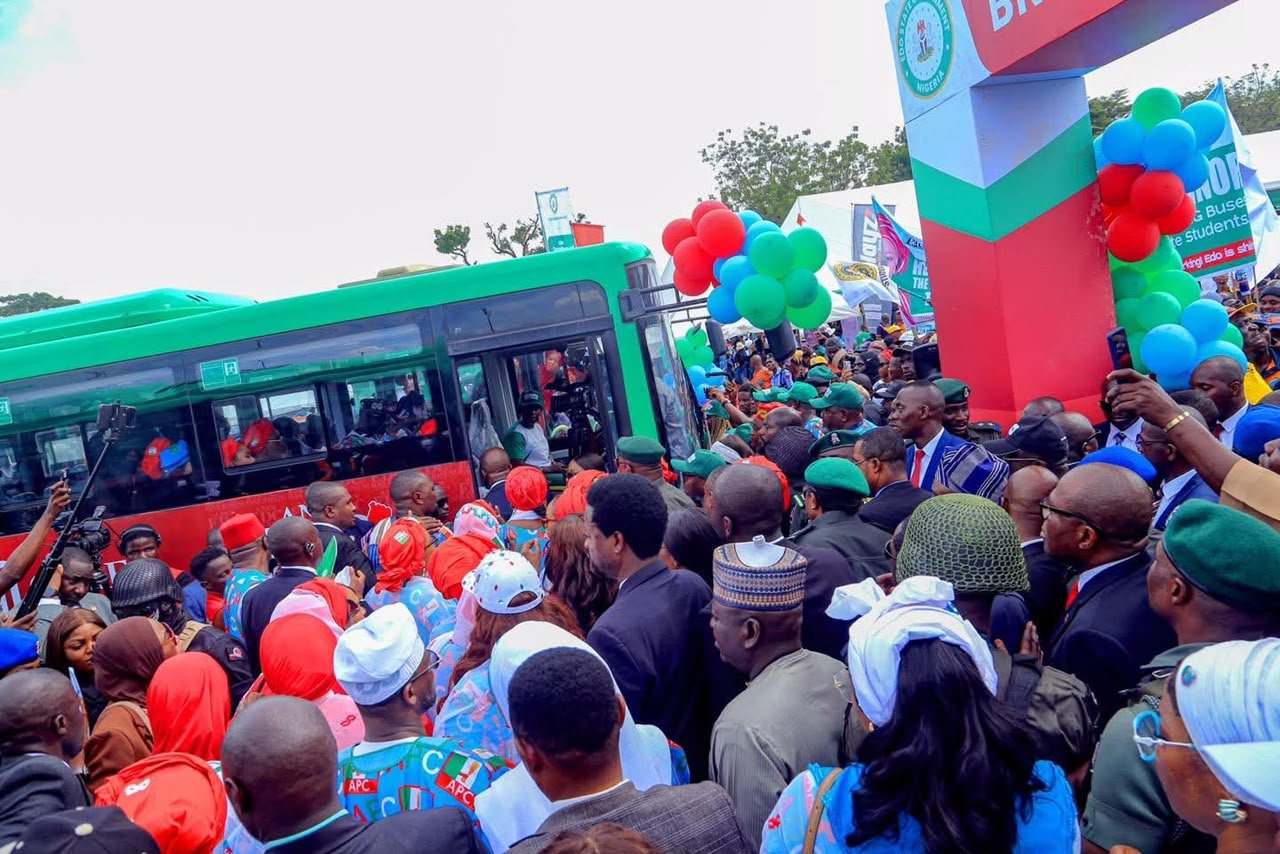
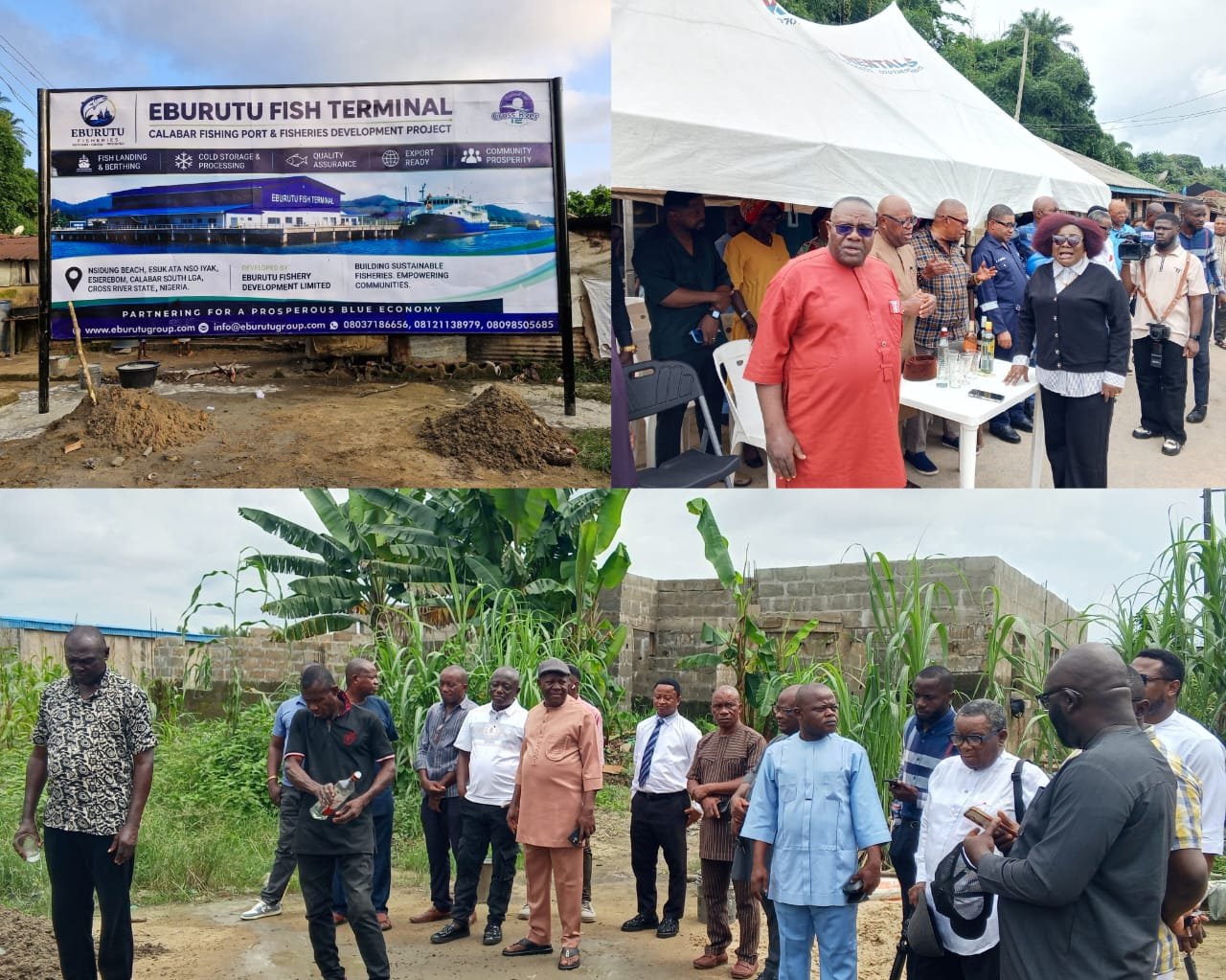
The Cross River State Government has officially unveiled the project site and billboard for the Eburutu Fishing Terminal in Esierebom, Calabar South. The strategic public-private partnership (PPP), operating as Eburutu Fishery Development Ltd (EFDL), aims to transform the state’s marine economy, enhance food security, and expand export capabilities.
Situated on 3.2 hectares of state-approved waterfront land along the Calabar River, the integrated fisheries complex represents a major step in Governor Bassey Otu’s “People First” economic agenda. The development is operating under a compressed execution roadmap targeting full commissioning by 2027.
Speaking at the site unveiling in Esierebom community on Tuesday, the Managing Director of AMET Industries Ltd and Executive Director of Operations at EFDL, Mr. Efiom Umo Efiom, detailed the project’s scale and economic outlook.
READ ALSO: Fake Doctor Arrested in Calabar Over N500000 Job Scam
“The project will comprise 15 brand new fishing trawlers – 10 for fishes of different sizes, 3 for shrimps, and 2 for mixed fishes like mackerel and titus,” Efiom stated. “We are going to build a state-of-the-art fish processing plant featuring a 200-ton-per-day cold storage facility, an integrated feed mill to convert waste into livestock feed, and fish dehydration units.”
Efiom stated that the multi-million-dollar enterprise is projected to boost Cross River’s internally generated revenue by 40 to 60 percent while generating over 1,000 direct jobs and 5,000 indirect employment opportunities. “We chose Cross River State because this is home. There is a lot to tap into in the maritime fisheries sector, and this will put Cross River out there on the global map,” he added.
The Commissioner for Livestock, Aquaculture, and Fishery Development, Ntufam Emmanuel Anom, emphasized that management and workforce recruiting would prioritize local talent. “This industry is going to be owned and run by Cross River residents. The board members and workers will be recruited right here in the state,” Anom stated.
Similarly, the Commissioner for Social Welfare and Community Development, Bishop Prof. Margaret Ene-Ita, noted that the facility will drive zero-waste industrial processing while revitalizing host communities.
“Every part of the fish will be useful – even collagen extracted from fish scales for skin care products,” Ene-Ita explained. “This showcases His Excellency’s ‘People First’ vision. The residents of Esierebom will be the first beneficiaries of employment and economic growth.”
Pastor Patrick Archibong, Chairman of Calabar South Local Government Area, remarked that the initiative will provide vital socio-economic opportunities for youth in the area, helping steer young people away from crime and drug abuse through skill-building and gainful employment.
Also speaking, Hon. Imoukhuede Liyel, Special Adviser to the Governor on Livestock Development, highlighted the strategic synergy between livestock and marine resources. He noted that the Office of Livestock Development will integrate the terminal’s operations with existing agricultural initiatives to secure protein self-sufficiency and lower the state’s reliance on imported seafood.
Chief Ededem Henshaw, Village Head of Esierebom, welcomed the economic uplift but urged the Calabar South local government authority to clear access routes to ensure smooth transport logistics for the incoming facility.
On his part, Asuquo Okon, youth leader of Esierebom, expressed happiness for the investment brought to the community. He pledged to mobilize youths to ensure that adequate security is provided for the smooth take-off and operation of the company.
For Evangelist Bassey Iseme, President, Cross River State All Real Fishermen and Women Value Chain Fishery Development Cooperative, the fishery industry is vast with enormous potential for job creation. He said the Cooperative would ensure that job opportunity in the company is fairly spread across the state.
Beyond domestic markets, EFDL aims to address Nigeria’s structural seafood deficit – where the nation currently spends over $1.5 billion annually on seafood imports. The facility is actively pursuing international food-safety certifications, including HACCP, ISO 22000, and Marine Stewardship Council (MSC) compliance.
Once operational, the facility plans to export processing-grade seafood from the Gulf of Guinea directly to markets across Europe, the United States, the Middle East, and Asia, positioning Calabar as a major hub for the West African blue economy.