






By Ovat Abeng
When Anambra was created in 1991, it inherited no purpose-built seat of government. What became the “official” government house was a prefabricated structure originally erected to house construction workers. For thirty-four years, four governors — Mbadinuju, Ngige, Obi, Obiano — each inherited the problem and left office without resolving it.
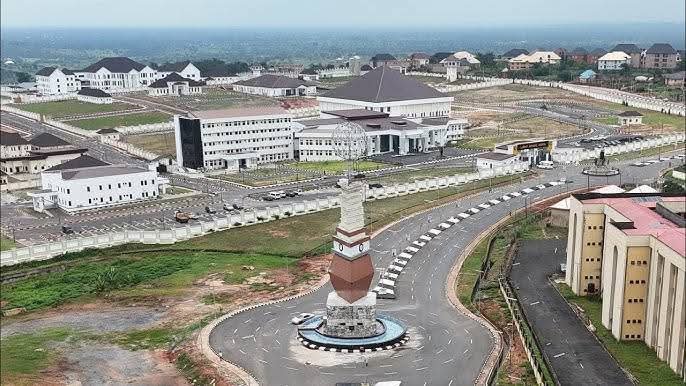
Soludo arrived in 2022, named it plainly in his first budget as a thirty-one-year embarrassment, and fixed it, not with a modest renovation, but with a twenty-three-hectare mini-city of over fifty structures, first rescuing the site from severe gully erosion before laying a single foundation. President Tinubu, who commissioned it, declared: “Anambra is rising.”
READ ALSO: Robbers raid church, steal holy communion
The campus includes the Government House, Deputy Governor’s Office, Executive Council Chambers, a 1,225-capacity banquet hall, amphitheatre, iconic Light of the Nation Tower, and grounds planted with thousands of trees, assessed as effectively carbon neutral.
Light House Awka is the centrepiece of an administration that has built over nine hundred kilometres of roads, eight bridges, five hospitals, and recruited 8,115 teachers, all without borrowing a kobo from any commercial organisation.
Beyond Anambra, it is proof that the gap between governmental promise and delivery can be closed. But a building is not governance in full. The benchmark it sets is not only architectural – it is moral. Anambra has the light. The task now is to shine it.